 Skip to content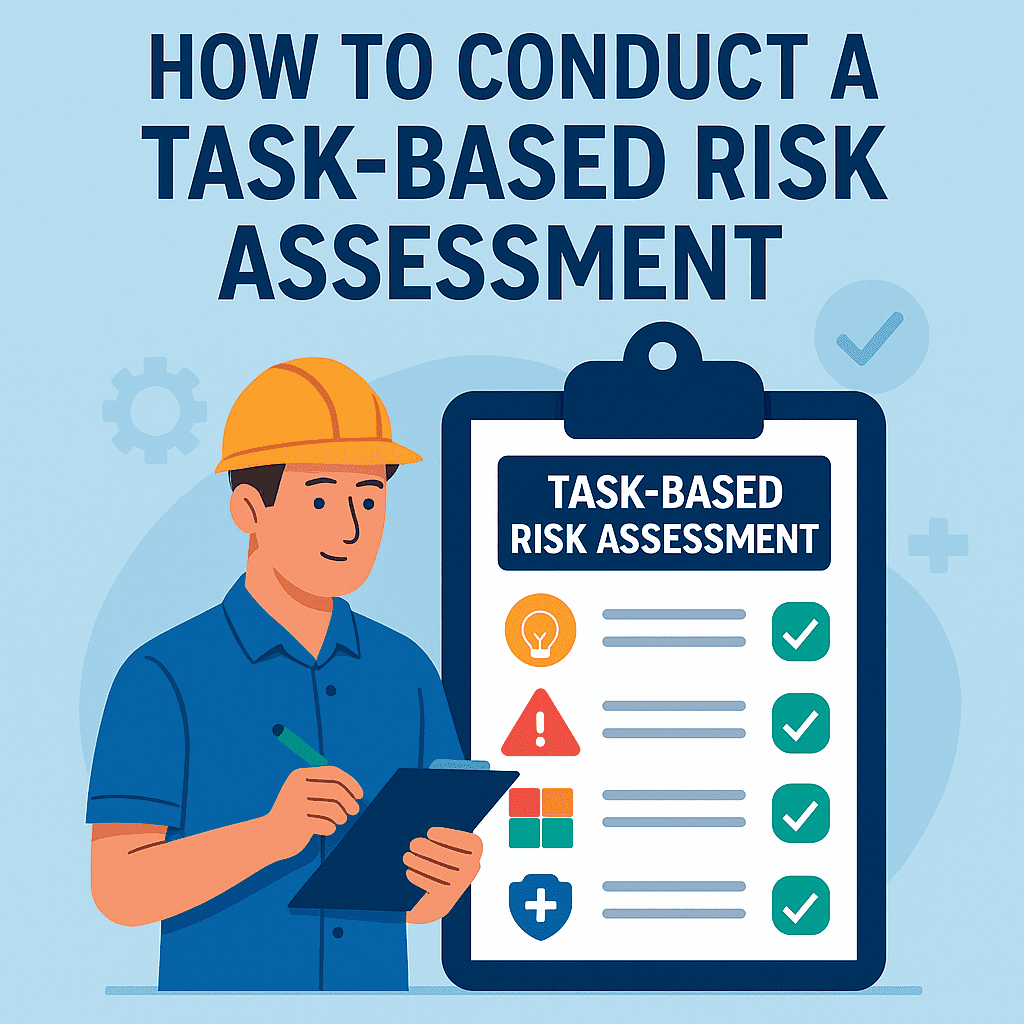
How to Conduct a Task Based Risk Assessment (TBRA) – A Step-by-Step Safety Guide
🔍 What is a Task-Based Risk Assessment (TBRA)?
A Task-Based Risk Assessment (TBRA) is a systematic approach used to identify hazards and evaluate risks associated with specific tasks before they are carried out. Unlike general risk assessments that cover broader activities or areas, TBRA focuses on individual job steps to pinpoint immediate risks and apply targeted control measures.
This approach is particularly useful in industries like construction, oil & gas, manufacturing, and mining, where even a minor deviation in task execution can lead to major safety incidents.
🎯 Why is TBRA Important?
Here’s why every safety-conscious organization should implement TBRA:
- ✅ Identifies specific hazards tied to tasks
- ✅ Prevents injuries and near-misses
- ✅ Helps meet legal and ISO 45001 compliance
- ✅ Enhances safety culture and awareness
- ✅ Reduces downtime and incident costs
📋 Key Components of TBRA
- Job/Task Description
- Step-by-Step Breakdown
- Hazard Identification
- Risk Evaluation
- Control Measures
- Residual Risk Rating
- Review & Approval
🧠 Step-by-Step Guide to Perform a Task-Based Risk Assessment
Let’s break down the full process of conducting a TBRA:
✅ Step 1: Select the Task for Assessment
Start by identifying the task to be assessed. Choose tasks that are:
- New or non-routine
- High-risk or critical
- Recently linked to incidents or near-misses
Example: Lifting materials using a crane.
✅ Step 2: Break the Task into Steps
List each step required to complete the task. Be precise.
Example:
- Preparation of lifting gear
- Slinging the load
- Lifting and moving the load
- Placing the load down
✅ Step 3: Identify Hazards for Each Step
Think about what could go wrong at each step. Use the PEME approach:
- P – People
- E – Equipment
- M – Materials
- E – Environment
Example Hazards:
- Pinch points
- Crane failure
- Load swinging
- Poor communication
✅ Step 4: Evaluate the Risk
Use a Risk Matrix to determine the likelihood and severity.
| Severity (S) | Likelihood (L) | Risk = S × L |
|---|---|---|
| 1 = Minor | 1 = Rare | 1–3 = Low |
| 2 = Moderate | 2 = Possible | 4–6 = Medium |
| 3 = Major | 3 = Likely | 9 = High |
✅ Step 5: Define Control Measures
Use the Hierarchy of Controls:
- Elimination – Remove the hazard
- Substitution – Replace with safer option
- Engineering Controls – Isolate hazard
- Administrative Controls – SOPs, training
- PPE – Gloves, helmets, harnesses
✅ Step 6: Assess Residual Risk
Reassess the risk after applying controls to ensure it’s within acceptable levels.
✅ Step 7: Record & Approve the TBRA
Use a standard TBRA form, get it reviewed by a supervisor or safety officer, and ensure all team members understand it.
📌 Sample TBRA for “Hot Work – Welding Operation”
| Step | Hazard | Risk (S×L) | Controls | Residual Risk |
|---|---|---|---|---|
| 1. Setup | Gas leak, fire | 3×2=6 | Gas leak check, fire watch | 2×1=2 |
| 2. Welding | Sparks, burns | 3×3=9 | Fire blankets, PPE | 2×1=2 |
| 3. Completion | Hot surface | 2×2=4 | Signage, cooldown time | 1×1=1 |
📊 Risk Matrix Chart
| Risk Score | Risk Level | Action Required |
|---|---|---|
| 1–3 | Low | Acceptable – Monitor |
| 4–6 | Medium | Control required – Supervise |
| 7–9 | High | Stop – Do not proceed until mitigated |
🧰 When Should You Use TBRA?
- Before non-routine tasks
- During Permit to Work approval
- After an incident investigation
- During project planning stages
- For contractor work involving hazards
🔁 TBRA vs JSA vs HIRA – What’s the Difference?
| Method | Focus | Usage |
|---|---|---|
| TBRA | Task-specific | Field level, daily basis |
| JSA | Job-level | Routine jobs, toolboxes |
| HIRA | Activity-based | Project or plant level |
TBRA is more detailed at the task execution level, while HIRA covers broader operational risks.
🧠 Tips for Effective TBRA
- Involve frontline workers in assessment
- Use clear and concise language
- Update TBRA if conditions change
- Attach TBRA with work permits
- Train teams to recognize hazards on the spot
🔗 Internal Links
- How to Perform a Fire Risk Assessment in the Workplace – Step-by-Step Guide
- How to Conduct a Dynamic Risk Assessment in Real-Time Work Environments
- Step-by-Step Guide to Conducting a Job Safety Analysis (JSA) in the Workplace
- Electrical Safety Inspection Checklist | Free Downloadable Template
- Daily Construction Site Safety Checklist | Free Template
🔗 External Link
✅ Conclusion
Task-Based Risk Assessment is a powerful tool that empowers workers to identify risks before they start a task. By adopting TBRA in your organization, you’re not just checking a compliance box — you’re building a safety-first culture.
Don’t wait for accidents to happen. Use TBRA proactively, and protect your workforce every single day.
