 Skip to content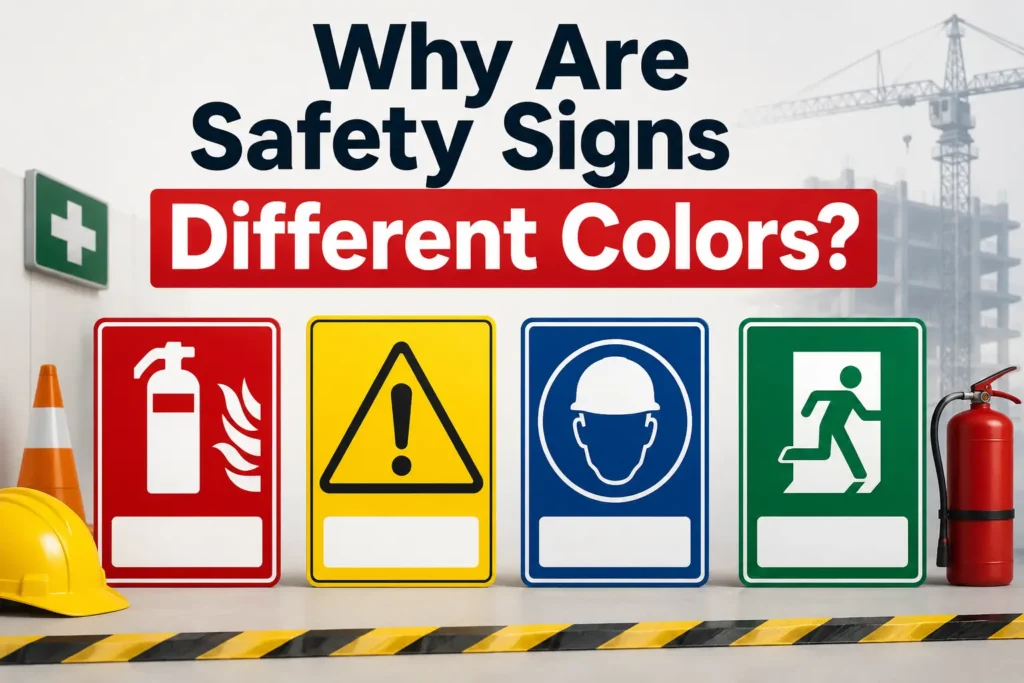
Why Are Safety Signs Different Colors?
Walk onto any construction site, factory, warehouse, or industrial plant, and you’ll immediately notice colorful safety signs everywhere.
Some signs are:
- Red
- Yellow
- Blue
- Green
Have you ever wondered why?
Why aren’t all safety signs the same color?
This is one of the most common questions asked during HSE training, NEBOSH classes, toolbox talks, and safety interviews.
Why are safety signs different colors?
The answer is simple.
Each color has a specific meaning.
Workers can quickly recognize the type of hazard or instruction without reading every word on the sign.
During an emergency, there may not be enough time to stop and read detailed instructions.
Colors provide an instant visual warning that helps workers react faster and make safer decisions.
Let’s understand what each safety sign color means and why these colors play such an important role in accident prevention.
Why Safety Sign Colors Are Important
Imagine entering a noisy construction site.
Heavy machinery is operating.
Workers are moving materials.
Vehicles are reversing.
There isn’t always time to read every sign.
Instead, workers recognize the color first.
That immediate recognition helps them understand whether they need to:
- stop
- wear PPE
- watch for hazards
- find emergency equipment
Using standardized colors creates consistency across workplaces.
Whether you’re working in India, the UAE, Saudi Arabia, Canada, or the UK, the meaning of these colors is generally the same.
What Does the Red Safety Sign Mean?
Red is one of the most recognizable safety colors.
It immediately attracts attention.
Red signs are commonly used for:
- fire equipment
- emergency stop controls
- prohibition signs
Examples include:
- Fire Extinguisher
- Fire Hose Reel
- Emergency Stop Button
- No Smoking
- No Entry
When workers see a red sign, they immediately understand that it relates to either:
- prohibition
or
- fire safety
This rapid recognition is especially important during emergencies.
What Does the Yellow Safety Sign Mean?
Yellow is used to warn workers about potential hazards.
It does not necessarily mean danger is already present.
Instead, it means:
Be Careful.
Common yellow warning signs include:
- Slippery Surface
- High Voltage
- Forklift Operating Area
- Falling Objects
- Excavation Ahead
Yellow signs encourage workers to remain alert and take extra precautions before entering the area.
They help prevent accidents before they happen.
What Does the Blue Safety Sign Mean?
Blue signs provide:
Mandatory Instructions
These signs tell workers what they must do.
Examples include:
- Wear Safety Helmet
- Wear Safety Shoes
- Wear Safety Glasses
- Hearing Protection Must Be Worn
- Use Safety Harness
Unlike warning signs, blue signs are not suggestions.
They indicate compulsory actions that workers must follow before entering the area or performing a task.
Ignoring mandatory signs can increase the risk of injury.
What Does the Green Safety Sign Mean?
Green represents:
Safe Conditions
and
Emergency Information.
Examples include:
- Emergency Exit
- First Aid Room
- Emergency Assembly Point
- Eye Wash Station
- Emergency Shower
During an emergency, workers can quickly locate safe escape routes and emergency equipment simply by following green signs.
This improves evacuation speed and emergency response.
Why Standard Colors Improve Workplace Safety
Imagine if every company used different colors.
One workplace might use blue for fire extinguishers.
Another might use yellow.
Workers moving between sites would become confused.
Standardized colors eliminate this problem.
They provide a common safety language understood across industries.
Consistency saves time.
More importantly, it saves lives.
Where Are Safety Signs Commonly Installed?
Safety signs can be found throughout the workplace.
Typical locations include:
- construction entrances
- electrical rooms
- scaffolding access points
- confined spaces
- crane operating zones
- emergency exits
- fire equipment locations
Signs should always be:
- visible
- clean
- well maintained
- easy to understand
Poorly positioned signs lose their effectiveness.
Why Symbols Are Used Along With Colors
Many workplaces employ workers who speak different languages.
Instead of relying only on written text, safety signs also use:
- symbols
- pictograms
- graphics
For example:
A picture of a safety helmet immediately tells workers:
Helmet Required
even if they cannot read the written language.
Combining colors with symbols improves communication and reduces misunderstandings.
Common Mistakes Workers Make
Many accidents occur because workers ignore safety signs.
Examples include:
Walking Past Warning Signs
Workers enter hazardous areas without caution.
Ignoring Mandatory PPE Signs
Required protective equipment is not worn.
Blocking Emergency Exit Signs
Evacuation routes become difficult to locate.
Damaging Safety Signs
Important information becomes unreadable.
Every safety sign serves a purpose.
Ignoring them increases workplace risk.
How Safety Officers Ensure Sign Compliance
Safety Officers regularly inspect workplace signage.
They check:
- correct sign placement
- visibility
- cleanliness
- damage
- missing signs
When hazards change, new signs should be installed immediately.
Safety signage should always reflect current site conditions.
Why Safety Signs Alone Cannot Prevent Accidents
Although safety signs are extremely important, they are only one part of workplace safety.
Safe workplaces also require:
- training
- supervision
- PPE
- inspections
- risk assessments
- safe work procedures
Signs remind workers about hazards.
They cannot eliminate hazards by themselves.
The best results occur when signage is combined with good safety management.
Why This Question Is Common in Safety Interviews
Interviewers often ask:
“Why are safety signs different colors?”
A good answer is:
Because each color has a standardized meaning that allows workers to quickly recognize hazards, mandatory actions, fire equipment, and emergency information.
Strong candidates should also explain:
- Red = Prohibition and Fire Equipment
- Yellow = Warning
- Blue = Mandatory Action
- Green = Safe Condition and Emergency Information
This demonstrates practical workplace safety knowledge.
How Safety Signs Help Prevent Accidents
Safety signs provide immediate visual information.
They help workers:
- recognize hazards
- locate emergency equipment
- follow safety instructions
- identify escape routes
Even experienced workers benefit from visual reminders.
A simple sign can prevent a serious accident by encouraging someone to stop, think, and act safely.
That is why safety signage remains one of the most effective administrative controls in workplace safety.
Conclusion
Safety signs are different colors because each color communicates a specific safety message.
The standard meanings are:
- Red = Fire Equipment and Prohibition
- Yellow = Warning
- Blue = Mandatory Action
- Green = Safe Condition and Emergency Information
These standardized colors allow workers to understand important safety information instantly, even before reading the text.
Combined with symbols, proper training, and safe work practices, safety signs help reduce accidents, improve emergency response, and create safer workplaces.
Understanding the meaning of safety sign colors is a basic but essential skill for every worker and Safety Officer.
What Is the Minimum Height Required for Guardrails on a Construction Site?
What Is the Maximum Safe Angle for Positioning a Portable Ladder?
FAQs
Why are safety signs different colors?
Different colors communicate different types of safety information quickly and consistently.
What does a red safety sign mean?
Red is used for fire equipment and prohibition signs such as “No Smoking” or “Fire Extinguisher.”
What does a yellow safety sign mean?
Yellow warns workers about potential hazards and encourages caution.
What does a blue safety sign mean?
Blue indicates mandatory actions such as wearing PPE.
What does a green safety sign mean?
Green identifies emergency information, safe conditions, first aid facilities, and emergency exit routes.
