 Skip to content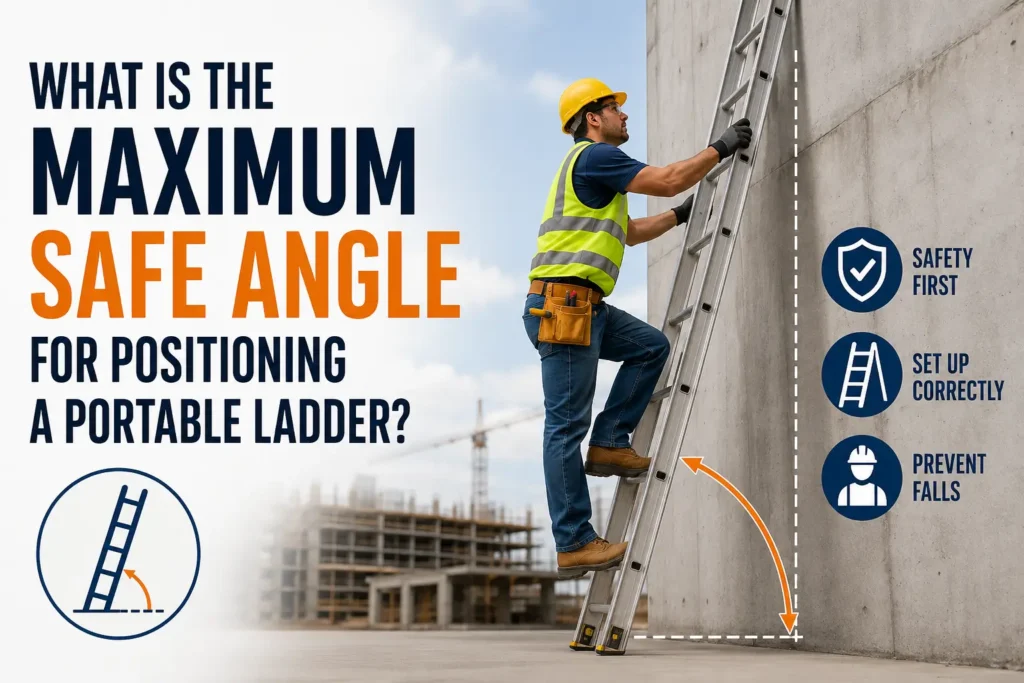
Portable ladders are among the most commonly used tools on construction sites, warehouses, factories, and maintenance projects.
Because ladders are so familiar, many workers underestimate the risks associated with using them.
Every year, thousands of injuries occur due to:
- ladder slips
- ladder collapses
- incorrect ladder setup
- falls from height
One question frequently asked during HSE interviews, toolbox talks, and safety inspections is:
What Is the Maximum Safe Angle for Positioning a Portable Ladder?
The recommended safe ladder angle is:
75 Degrees
This angle is commonly achieved using the:
4:1 Rule
This means:
For every 4 units of ladder height, the base should be positioned 1 unit away from the supporting structure.
For example:
- Ladder height = 4 meters
- Base distance from wall = 1 meter
This simple rule helps prevent ladder instability and reduces the risk of falls.
Let’s understand why the correct ladder angle is so important.
Why Ladder Angle Matters
Many ladder accidents happen before a worker even starts climbing.
The problem begins with incorrect positioning.
If a ladder is too steep:
- it may tip backward
- balance becomes difficult
- worker stability decreases
If a ladder is too shallow:
- the base may slide outward
- the ladder may collapse
- fall risk increases significantly
The correct angle creates a balance between stability and usability.
That is why ladder setup is considered a critical safety requirement.
What Is the 4:1 Rule?
The easiest way to position a portable ladder safely is by following the:
4:1 Rule
The rule states:
For every 4 feet (or 4 meters) of vertical height, place the ladder base 1 foot (or 1 meter) away from the wall.
Example 1
If the ladder reaches:
- 4 meters high
Then the base should be:
- 1 meter away
Example 2
If the ladder reaches:
- 8 meters high
Then the base should be:
- 2 meters away
Following this rule automatically creates an angle close to 75 degrees.
Why 75 Degrees Is Considered Safe
Safety experts recommend approximately:
75 Degrees
because it provides optimal stability.
At this angle:
- weight is distributed properly
- slipping risk decreases
- climbing becomes easier
- balance improves
Many international safety standards recognize this angle as the preferred setup for portable leaning ladders.
It has been proven effective through years of practical use.
What Happens If the Ladder Is Too Steep?
A ladder positioned almost vertically may appear stable.
However, it creates several hazards.
Potential problems include:
Backward Tipping
The ladder may fall away from the structure.
Reduced Contact Stability
The ladder relies heavily on the upper support point.
Increased Worker Fatigue
Climbing becomes less natural and more difficult.
These conditions increase accident risk.
What Happens If the Ladder Is Too Shallow?
This mistake is even more common.
When the base is too far from the wall:
Base Slippage
The ladder may slide outward.
Structural Stress
Additional forces are applied to ladder components.
Fall Risk
Worker stability decreases significantly.
Many serious ladder accidents occur because the ladder was positioned at an unsafe angle.
How to Check the Ladder Angle Quickly
Many workers use a simple method called:
The Arm’s Length Test
Follow these steps:
- Stand at the ladder base.
- Place your toes against the ladder feet.
- Extend your arms straight forward.
If your palms comfortably touch the ladder rung at shoulder height, the ladder angle is approximately correct.
This simple field method helps workers verify proper positioning quickly.
Which Ladders Require the 4:1 Rule?
The 4:1 Rule generally applies to:
- extension ladders
- straight ladders
- leaning ladders
It does not apply in the same way to:
- step ladders
- platform ladders
- specialty ladders
Each ladder type has specific setup requirements.
Workers should always follow manufacturer instructions.
Why Ladder Falls Are So Common
Many workers believe ladder work is low risk.
In reality, ladder falls remain one of the most common workplace accidents.
Contributing factors include:
- incorrect angle
- damaged ladders
- overreaching
- improper footing
- slippery surfaces
Because ladders are used frequently, workers sometimes become complacent.
This increases accident risk.
Other Important Ladder Safety Rules
Correct angle is only one part of ladder safety.
Additional requirements include:
Inspect Before Use
Check for:
- cracks
- bent rails
- damaged rungs
Secure the Ladder
Prevent movement whenever possible.
Maintain Three Points of Contact
Keep:
- two hands and one foot
or
- two feet and one hand
in contact while climbing.
Face the Ladder
Always climb facing the ladder.
These simple practices improve safety significantly.
Should Ladders Extend Above the Landing Area?
Yes.
When a ladder is used for access to an elevated surface, it should typically extend:
At Least 1 Meter (3 Feet)
above the landing point.
This provides workers with a secure handhold when transitioning on or off the ladder.
Insufficient extension can increase fall risk.
Common Ladder Safety Violations
Safety Officers frequently observe:
Incorrect Ladder Angle
One of the most common issues.
Unsecured Ladders
Movement creates instability.
Damaged Equipment
Defective ladders should never be used.
Workers Carrying Heavy Loads
This affects balance and stability.
Standing on Top Rungs
Extremely dangerous behavior.
Correcting these violations reduces accident risks dramatically.
Why Safety Officers Ask This Interview Question
Interviewers often ask:
“What is the safe angle for a portable ladder?”
The expected answer is:
75 Degrees or the 4:1 Rule
However, strong candidates also explain:
- why the angle is important
- risks of incorrect positioning
- methods for verifying the angle
Understanding the reason behind the rule demonstrates practical safety knowledge.
Ladder Safety and Risk Assessment
Before ladder work begins, Safety Officers should consider:
- ladder condition
- ground stability
- weather conditions
- work duration
- fall hazards
In some situations, alternatives such as:
- scaffolding
- mobile platforms
- aerial work platforms
may provide safer solutions.
Risk assessment helps determine the most appropriate access method.
Why Proper Ladder Setup Saves Lives
Most ladder accidents are preventable.
The correct ladder angle takes only a few seconds to establish.
Yet that simple action can prevent:
- slips
- falls
- serious injuries
- fatalities
Small safety measures often have the biggest impact.
Proper ladder positioning is one of them.
Conclusion
The maximum safe angle for positioning a portable ladder is generally:
75 Degrees
This angle is easily achieved using the:
4:1 Rule
where the ladder base is placed 1 unit away from the wall for every 4 units of vertical height.
Correct ladder positioning helps prevent:
- ladder slips
- instability
- falls from height
Combined with proper inspection, securing methods, and safe climbing practices, correct ladder angle significantly improves worker safety.
A few seconds spent setting up a ladder correctly can prevent accidents that may change lives forever.
What Is the Minimum Safe Distance From an Excavation Edge for Storing Excavated Soil (Spoil Pile)?
What Is the Difference Between a Safety Officer and an HSE Engineer?
What Is the Correct Height for Installing Fire Extinguishers?
What Is the Safe Distance Between a Crane and Power Lines?
FAQs
What is the safe angle for a portable ladder?
The recommended safe angle is approximately 75 degrees.
What is the 4:1 ladder rule?
For every 4 units of ladder height, the base should be placed 1 unit away from the wall.
Why is ladder angle important?
Incorrect angles can cause ladder slips, instability, and falls.
How can I check the ladder angle quickly?
Use the arm’s length test by standing at the base and extending your arms toward the ladder.
Should a ladder extend above the landing area?
Yes. It should typically extend at least 1 meter (3 feet) above the landing surface.
