 Skip to content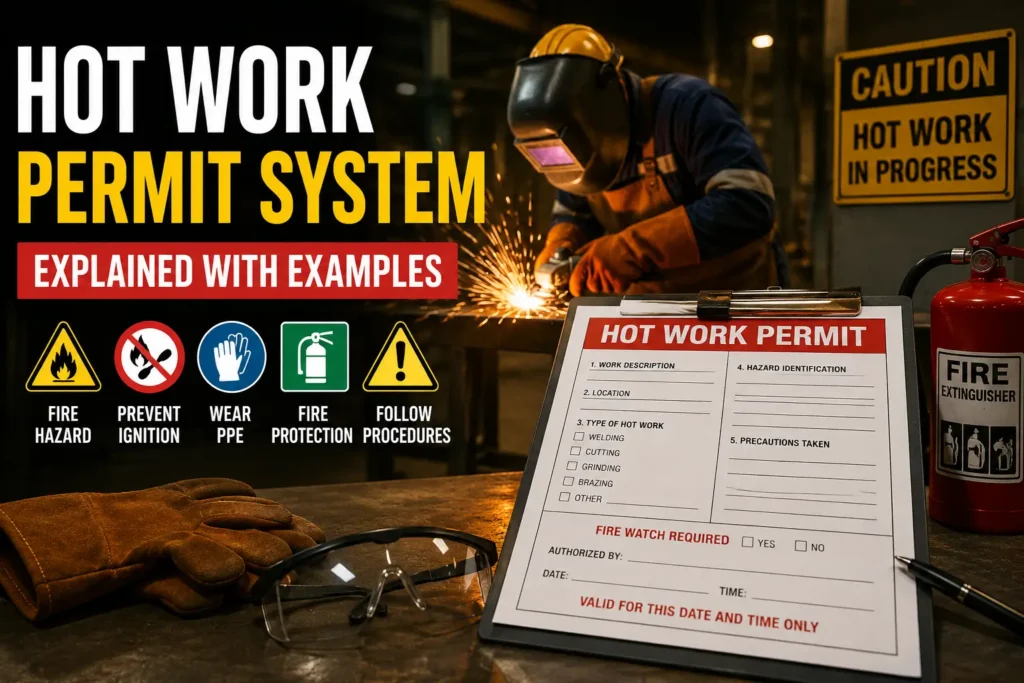
Hot Work Permit System Explained with Examples
Hot work activities are some of the most dangerous tasks performed in construction sites, factories, oil and gas facilities, warehouses, shipyards, and industrial plants. Welding, gas cutting, grinding, soldering, and brazing may appear like routine operations, but these activities generate intense heat, sparks, flames, and molten metal capable of causing devastating fires and explosions within seconds. That is why understanding the Hot Work Permit System is essential for every worker, supervisor, safety officer, and employer involved in hazardous operations.
Many industrial fires begin during routine maintenance or repair work because basic safety precautions were ignored. A few sparks from grinding may land on flammable materials hidden nearby. Welding near gas lines may ignite vapors unexpectedly. Workers may begin cutting operations without checking surrounding hazards or arranging proper fire protection. In most cases, warning signs existed before the incident happened, but the work started without proper planning and authorization.
According to OSHA and fire safety organizations, hot work continues to contribute to serious industrial fires and explosions worldwide.
A Hot Work Permit system acts like a safety checkpoint before dangerous activities begin. It ensures hazards are identified, fire prevention measures are implemented, responsible personnel are informed, and emergency preparedness is in place before sparks start flying.
Think of a Hot Work Permit like preparing a launch sequence before firing a rocket. Engineers do not simply press a button and hope everything works safely. Every system must be checked carefully because one overlooked hazard can lead to disaster. The same principle applies to hot work operations.
The good news is that most hot work accidents are preventable when permit systems, inspections, worker training, and fire prevention measures are implemented properly.
Understanding Hot Work Activities
Hot work refers to any activity that produces heat, sparks, flames, or ignition sources capable of causing fires or explosions. These tasks are common in industrial operations, especially during construction, fabrication, maintenance, and repair activities.
Many workers become comfortable performing hot work because they do it regularly. Unfortunately, familiarity often creates overconfidence. A worker may believe a quick grinding task or small welding repair is harmless, even when flammable materials are nearby. Hot work hazards are dangerous because fires can start silently and spread rapidly before workers realize something is wrong.
Imagine throwing burning matches into dry grass during windy weather. Even a small spark may trigger a massive fire if conditions allow ignition. Hot work creates similar risks in workplaces containing combustible materials, vapors, dust, or gases.
What Is Hot Work?
Hot work activities include:
- Welding
- Gas cutting
- Grinding
- Brazing
- Soldering
- Torch cutting
- Flame heating
These activities generate ignition sources that may ignite nearby combustible materials or vapors.
Why Hot Work Is Dangerous
Hot work creates multiple hazards simultaneously including:
- Fire
- Explosion
- Burns
- Toxic fumes
- Eye injuries
- Electrical hazards
Sparks from grinding or welding may travel several meters and ignite hidden combustible materials unexpectedly.
Hot work accidents often escalate quickly because fires spread rapidly in industrial environments.
Understanding the Hot Work Permit System
A Hot Work Permit system is a formal written procedure used to control hazardous hot work operations safely.
What Is a Hot Work Permit?
A Hot Work Permit is an official authorization document allowing specific hot work activities under controlled conditions.
The permit confirms that:
- Hazards have been assessed
- Fire prevention measures are in place
- Workers understand safety requirements
- Emergency arrangements are available
Hot work should never begin without proper authorization in hazardous environments.
Purpose of a Hot Work Permit
The permit system helps ensure:
- Fire hazards are identified
- Flammable materials are removed
- Firefighting equipment is available
- Workers wear proper PPE
- Gas testing is completed where required
- Responsible personnel monitor the activity
The permit acts as a communication tool between workers, supervisors, safety officers, and management.
Common Hazards During Hot Work
Hot work hazards can quickly become catastrophic if safety controls fail.
Fire Hazards
Fires are the most common hot work hazard.
Ignition sources may ignite:
- Wood
- Paper
- Chemicals
- Packaging materials
- Dust
- Fuel vapors
Even small sparks can trigger large fires under the right conditions.
Explosion Risks
Hot work near flammable gases, vapors, or combustible dust creates explosion hazards.
Confined spaces and enclosed areas are especially dangerous because gases may accumulate unnoticed.
Explosions generate extreme pressure, heat, and flying debris capable of causing multiple fatalities.
Toxic Fumes and Gases
Welding and cutting operations often produce harmful fumes and gases.
Workers may inhale:
- Metal fumes
- Carbon monoxide
- Ozone
- Toxic vapors
Poor ventilation increases exposure risks significantly.
Burns and Eye Injuries
Hot metal, sparks, flames, and radiation may cause serious burns or eye injuries.
Workers without proper PPE risk:
- Skin burns
- Arc eye injuries
- Heat stress
Protective equipment is essential during all hot work operations.
Electrical Hazards
Electric welding equipment creates electrocution risks, especially in wet or confined environments.
Damaged cables, poor grounding, and improper equipment maintenance increase these dangers.
Electrical safety should always remain part of hot work planning.
OSHA Requirements for Hot Work Safety
OSHA establishes hot work safety requirements to reduce workplace fires and explosions.
OSHA Hot Work Standards
OSHA requires employers to:
- Control ignition sources
- Provide fire protection equipment
- Conduct hazard assessments
- Train workers
- Maintain safe work environments
Hot work operations should follow approved procedures and permit systems.
Employer Responsibilities
Employers must provide:
| Employer Responsibility | Purpose |
|---|---|
| Hot work permits | Control hazardous activities |
| Fire extinguishers | Support emergency response |
| Worker training | Improve hazard awareness |
| PPE | Protect workers |
| Fire watch personnel | Monitor fire hazards |
Strong permit systems significantly reduce industrial fire risks.
Key Elements of a Hot Work Permit
A proper hot work permit should contain detailed safety information.
Work Description and Location
The permit should clearly identify:
- Type of hot work
- Exact location
- Duration of work
- Equipment used
Clear information prevents confusion and unauthorized activities.
Hazard Identification
The permit should identify hazards such as:
- Flammable materials
- Gas exposure
- Confined spaces
- Electrical hazards
- Nearby operations
Hazard identification improves planning and control measures.
Fire Prevention Measures
Fire prevention precautions may include:
- Removing combustibles
- Covering nearby materials
- Establishing exclusion zones
- Providing fire extinguishers
Preventive actions reduce ignition risks significantly.
Gas Testing Requirements
Some environments require atmospheric testing before hot work begins.
Gas testing may check for:
- Flammable gases
- Oxygen levels
- Toxic vapors
Unsafe atmospheres should never allow hot work operations.
PPE Requirements
Workers performing hot work may require:
- Welding helmets
- Fire-resistant clothing
- Gloves
- Respirators
- Safety shoes
- Face shields
Proper PPE protects workers from burns, fumes, and eye injuries.
Fire Watch Responsibilities
A fire watch is responsible for monitoring the work area during and after hot work activities.
Responsibilities include:
- Watching for fires
- Maintaining extinguishers nearby
- Monitoring surrounding areas
- Raising alarms if necessary
Many fires start after hot work ends because sparks remain hidden unnoticed.
Permit Authorization and Duration
Authorized personnel should approve permits before work begins.
Permits should include:
- Start time
- Expiry time
- Signatures
- Emergency instructions
Expired permits should never remain active.
Steps in the Hot Work Permit Process
Hot work permits should follow systematic procedures.
Step 1: Inspect the Work Area
Inspect the area carefully for:
- Combustible materials
- Gas hazards
- Ventilation issues
- Nearby operations
Site inspections help identify hidden risks early.
Step 2: Remove Flammable Materials
Remove or protect combustible materials near the work area.
Materials may include:
- Paper
- Fuel containers
- Chemicals
- Wooden pallets
- Dust accumulations
Reducing fuel sources improves fire safety significantly.
Step 3: Verify Fire Protection Equipment
Ensure fire extinguishers and emergency equipment remain available and functional.
Workers should know extinguisher locations and emergency procedures.
Quick response reduces fire escalation risks.
Step 4: Conduct Gas Testing
Perform atmospheric testing where necessary, especially in confined spaces or hazardous environments.
Unsafe gas levels should stop work immediately.
Continuous monitoring may also be required during operations.
Step 5: Issue and Monitor the Permit
Once all controls are verified, authorized personnel may issue the permit.
Supervisors and fire watch personnel should monitor activities continuously throughout the operation.
Hot Work Permit Examples
Understanding real examples helps workers apply permit systems more effectively.
Welding Example
A maintenance team needs to repair a steel pipe inside a factory using welding equipment.
Before work begins:
- Nearby flammable materials are removed
- Fire extinguishers are positioned nearby
- Gas testing confirms safe atmosphere
- Workers wear welding PPE
- Fire watch personnel remain present
The permit confirms all safety precautions before welding starts.
Grinding Example
Construction workers use grinders to cut steel sections near stored wooden materials.
The permit requires:
- Covering combustibles
- Creating spark barriers
- Assigning fire watch personnel
- Inspecting the area after work completion
These controls help prevent sparks from starting fires.
Common Hot Work Permit Mistakes
Many industrial fires happen because permit systems fail or precautions are ignored.
Ignoring Hidden Flammable Materials
Workers sometimes overlook combustible materials behind walls, beneath floors, or inside equipment.
Hidden hazards often ignite unexpectedly during hot work operations.
Thorough inspections improve safety significantly.
Lack of Fire Watch
Some workplaces skip fire watch assignments to save manpower.
Unfortunately, fires often start after workers leave because sparks smolder unnoticed.
Continuous monitoring is essential during and after hot work.
Best Practices for Safe Hot Work Operations
Strong hot work safety programs combine permits, inspections, worker training, supervision, and emergency preparedness.
Toolbox talks before hot work activities help workers understand hazards and safety precautions clearly. Even experienced welders and fabricators benefit from refresher training because routine tasks often create overconfidence.
Technology is improving hot work safety through gas monitoring systems, thermal cameras, digital permit systems, and automated fire detection equipment. However, technology alone cannot replace worker awareness and disciplined safety practices.
Companies with strong safety cultures encourage workers to stop unsafe work immediately and report hazards without fear of punishment.
Hot work safety is not about slowing production. It is about preventing devastating fires, explosions, and injuries that can destroy lives and businesses within minutes.
Conclusion
The Hot Work Permit System is one of the most important fire prevention tools used in industrial and construction environments. Hot work activities such as welding, cutting, and grinding create serious fire and explosion hazards that require careful planning and control.
A proper permit system ensures hazards are identified, fire prevention measures are implemented, workers wear appropriate PPE, gas testing is completed, and emergency arrangements are available before work begins.
Most hot work accidents are preventable through inspections, supervision, training, fire watch monitoring, and strong safety culture. Workers should never treat permits as simple paperwork because every completed permit represents a structured process designed to protect lives and property.
Every safe welding task, every monitored grinding operation, and every fire prevented represents another workplace protected from disaster. That is the true purpose of the Hot Work Permit System.
Hot Work Safety Precautions for Construction Sites
FAQs
1. What is a Hot Work Permit?
A Hot Work Permit is an official authorization document used to control hazardous activities involving heat, sparks, or flames.
2. What activities require a Hot Work Permit?
Activities such as welding, grinding, cutting, brazing, and soldering usually require hot work permits.
3. Why is fire watch important during hot work?
Fire watch personnel monitor for fires during and after hot work because sparks may ignite hidden combustible materials.
4. What PPE is required for hot work?
Common PPE includes welding helmets, gloves, fire-resistant clothing, face shields, respirators, and safety shoes.
5. Why is gas testing necessary before hot work?
Gas testing helps detect flammable gases, oxygen deficiencies, or toxic atmospheres that could cause fires or explosions.
