 Skip to content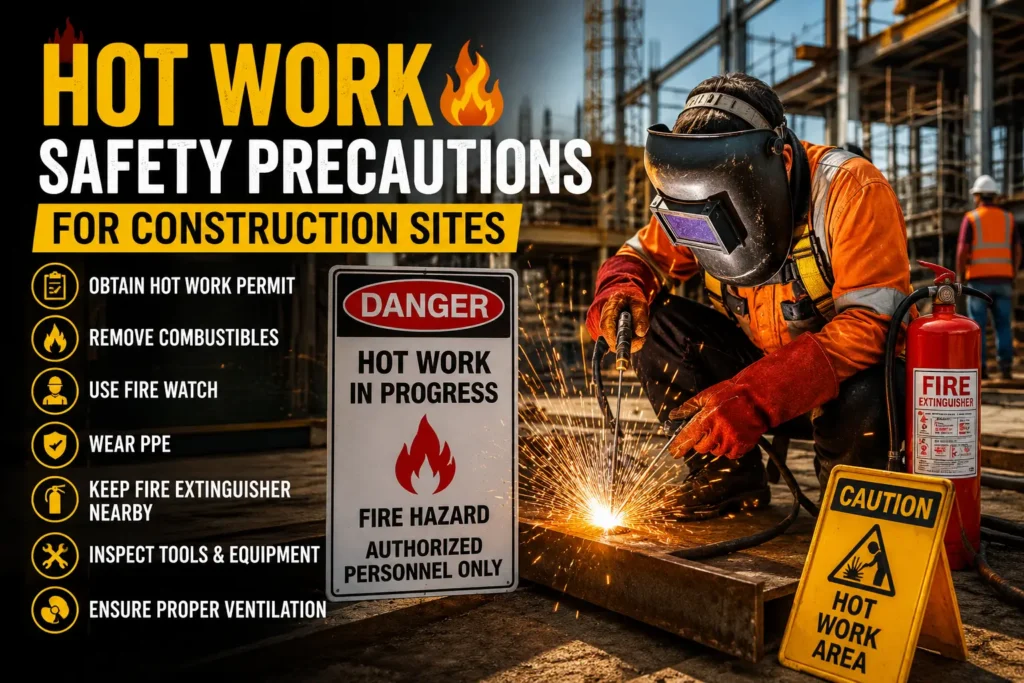
Hot Work Safety Precautions for Construction Sites
Hot work activities are among the most hazardous operations on construction sites. Welding, gas cutting, grinding, brazing, soldering, and flame heating may appear routine to experienced workers, but these tasks generate sparks, heat, and molten metal capable of starting devastating fires or explosions within seconds.
Every year, construction projects suffer major losses due to unsafe hot work practices. Workers experience severe burns, explosions destroy equipment, and fires damage buildings under construction. According to fire safety reports from National Fire Protection Association, hot work is one of the leading causes of industrial and construction fires.
The dangerous part about hot work is that hazards are not always visible immediately. A spark from welding may travel several meters unnoticed and ignite combustible materials later. Fires caused by hot work often begin after workers have already left the area, making prevention and monitoring critically important.
That is why understanding proper hot work safety precautions for construction sites is essential for workers, supervisors, contractors, and safety professionals. Safe hot work is not only about completing the task. It is about controlling ignition sources, protecting workers, and preventing catastrophic incidents before they happen.
What Is Hot Work?
Hot work refers to any activity that produces flames, sparks, or sufficient heat capable of igniting combustible materials. These activities are extremely common on construction sites where metal fabrication, structural work, equipment repairs, and installation tasks occur daily.
Hot work may look harmless when performed by skilled workers, but even experienced professionals can trigger fires or explosions if safety procedures are ignored. One tiny spark landing on combustible material can become the starting point of a massive incident.
Common Types of Hot Work Activities
Several construction activities fall under hot work operations:
| Hot Work Activity | Hazard Created |
|---|---|
| Welding | Sparks and intense heat |
| Gas cutting | Flames and molten metal |
| Grinding | Flying sparks |
| Brazing | Open flame exposure |
| Soldering | Heat and ignition risks |
| Flame heating | Fire hazards |
Each activity creates ignition sources capable of causing severe accidents if proper controls are not implemented.
Why Hot Work Is Extremely Dangerous
The biggest danger with hot work is that ignition sources are constantly generated during the task. Sparks can travel long distances, pass through openings, or settle in hidden areas where combustible materials are present.
Construction sites often contain:
- Wood
- Paints
- Solvents
- Packaging materials
- Fuel containers
- Gas cylinders
- Insulation materials
These combustible materials can ignite rapidly when exposed to heat or sparks.
Another major issue is that fires caused by hot work may smolder silently before becoming visible. Workers may complete tasks and leave the area while hidden ignition continues spreading slowly.
Importance of Hot Work Safety on Construction Sites
Hot work safety is essential because construction sites combine ignition sources with large amounts of combustible materials. This creates highly dangerous conditions if safety precautions are weak.
A single hot work incident can injure workers, damage expensive equipment, delay projects, and destroy partially completed structures.
Fire and Explosion Risks
Fire hazards are the primary concern during hot work. Sparks from welding or grinding can ignite combustible materials instantly or hours later.
Explosion risks become even more serious when hot work occurs near:
- Flammable gases
- Vapors
- Fuel storage
- Confined spaces
- Chemical containers
An explosion can generate shock waves, intense heat, structural collapse, and multiple fatalities within seconds.
Legal and Safety Responsibilities
Employers have legal responsibilities to protect workers from hot work hazards. Safety regulations established by organizations such as Occupational Safety and Health Administration require employers to implement hazard controls, provide training, and ensure safe work procedures.
Workers also have responsibilities. They must follow permit requirements, wear PPE correctly, inspect equipment, and report hazards immediately.
Hot work safety only succeeds when everyone participates actively.
Major Hazards Associated with Hot Work
Understanding hazards is the first step toward preventing accidents.
Fire Hazards
Hot work activities generate sparks capable of igniting combustible materials nearby. Sparks may also travel through cracks, pipes, vents, or floor openings into hidden locations.
Many construction fires start because workers underestimate spark travel distance.
Common Fire Causes
- Poor housekeeping
- Combustible storage near hot work
- Missing fire watch
- Uncontrolled sparks
- Inadequate inspections after work
Fire hazards increase dramatically in enclosed or congested work areas.
Explosion Hazards
Explosions occur when hot work ignites flammable gases, vapors, or dust particles. Confined spaces are especially dangerous because flammable atmospheres can accumulate quickly.
Even empty containers may contain residual flammable vapors capable of exploding when exposed to heat.
High-Risk Areas
| Area | Explosion Risk |
|---|---|
| Fuel storage areas | Flammable vapor ignition |
| Confined spaces | Gas accumulation |
| Chemical storage zones | Reactive materials |
| Paint storage rooms | Solvent vapors |
Atmospheric testing is critical before beginning hot work in hazardous environments.
Toxic Fumes and Gases
Welding and cutting operations generate harmful fumes and gases that can affect workers’ lungs, eyes, and nervous systems.
Common toxic exposures include:
- Carbon monoxide
- Metal fumes
- Ozone
- Nitrogen oxides
Poor ventilation increases exposure risks significantly.
Health Effects
Workers exposed to toxic fumes may experience:
- Breathing difficulties
- Dizziness
- Nausea
- Eye irritation
- Long-term respiratory disease
Respiratory protection and ventilation are essential controls.
Burns and Eye Injuries
Hot work exposes workers to high temperatures, molten metal, ultraviolet radiation, and flying particles.
Burn injuries can occur from:
- Direct flame contact
- Hot surfaces
- Molten metal splashes
- Sparks
Eye injuries are also common during grinding and welding operations.
Protection Measures
Workers should use:
- Welding helmets
- Face shields
- Flame-resistant clothing
- Heat-resistant gloves
- Safety goggles
Ignoring PPE requirements can lead to permanent injuries.
Essential Hot Work Safety Precautions
Conduct a Hot Work Risk Assessment
Every hot work activity should begin with a risk assessment. Supervisors must identify hazards, evaluate risks, and implement control measures before work starts.
A proper assessment should examine:
- Nearby combustible materials
- Ventilation conditions
- Confined space hazards
- Fire protection systems
- Emergency procedures
Risk assessments help prevent dangerous surprises during operations.
Implement a Hot Work Permit System
A hot work permit system is one of the most important safety controls for construction sites.
The permit ensures that:
- Hazards are identified
- Safety precautions are implemented
- Work is authorized properly
- Responsible personnel are assigned
Hot work should never begin without permit approval in high-risk areas.
Why Permits Matter
Permits create accountability and improve communication between workers, supervisors, and safety personnel.
They also verify that fire prevention measures are in place before ignition sources are introduced.
Remove Combustible Materials
Combustible materials should be removed from hot work areas whenever possible.
Common combustible materials include:
- Paper
- Wood
- Plastic
- Fuel containers
- Paint products
- Dust accumulations
If removal is impossible, materials should be protected using fire-resistant blankets or barriers.
Ensure Proper Ventilation
Ventilation is critical for controlling fumes, gases, and heat buildup.
Poor ventilation increases:
- Toxic exposure
- Fire risk
- Explosion potential
Ventilation Methods
| Method | Purpose |
|---|---|
| Natural ventilation | Fresh air movement |
| Mechanical ventilation | Forced air circulation |
| Local exhaust systems | Fume removal |
Confined spaces may require specialized ventilation systems.
Use Fire Watch Personnel
A fire watch is a trained individual responsible for monitoring the area during and after hot work activities.
The fire watch should:
- Observe spark movement
- Watch for smoke or fire
- Maintain extinguishers nearby
- Stop unsafe work immediately
Many fires start after workers finish hot work, making post-work monitoring essential.
Inspect Hot Work Equipment
Defective welding or cutting equipment can create major hazards.
Workers should inspect:
- Hoses
- Regulators
- Torches
- Electrical cables
- Gas connections
Damaged equipment should never be used.
Wear Proper Personal Protective Equipment
Hot work PPE protects workers from burns, sparks, fumes, and radiation.
Essential PPE may include:
- Welding helmets
- Flame-resistant clothing
- Leather gloves
- Safety boots
- Respirators
- Face shields
PPE should match the specific task and hazard level.
Maintain Fire Extinguishers Nearby
Appropriate fire extinguishers must remain easily accessible during hot work.
Workers should understand:
- Extinguisher types
- Fire classifications
- Proper extinguisher usage
Quick fire suppression can prevent small incidents from becoming disasters.
Control Gas Cylinders Safely
Gas cylinders contain highly pressurized and potentially flammable gases.
Improper cylinder handling can result in explosions or fires.
Safe Cylinder Practices
- Secure cylinders upright
- Keep away from heat sources
- Inspect regulators regularly
- Separate oxygen and fuel gases properly
Cylinder safety is critical during welding and cutting operations.
Monitor the Work Area After Completion
Fire risks continue even after hot work stops. Hidden sparks or smoldering materials may ignite later.
Many safety procedures require fire watch monitoring for at least 30 minutes after work completion.
Post-Work Inspection Areas
- Behind walls
- Under floors
- Ceiling spaces
- Adjacent rooms
- Material storage areas
Careful monitoring prevents delayed fire incidents.
Hot Work Permit System Explained
Purpose of Hot Work Permits
Hot work permits ensure proper hazard controls are implemented before ignition sources are introduced.
Permits improve:
- Communication
- Accountability
- Hazard awareness
- Emergency preparedness
They also document safety checks and approvals.
Information Included in a Permit
A hot work permit typically includes:
| Permit Information | Purpose |
|---|---|
| Work location | Hazard identification |
| Type of work | Risk evaluation |
| Fire prevention measures | Control verification |
| Gas testing results | Atmosphere safety |
| Permit duration | Time control |
| Authorized signatures | Accountability |
Proper documentation improves overall site safety.
Importance of Worker Training
Training helps workers recognize hazards and follow safe procedures consistently.
Hot work training should include:
- Fire prevention
- Equipment handling
- PPE usage
- Emergency response
- Permit procedures
Experienced workers also require refresher training periodically.
Emergency Response During Hot Work Incidents
Quick emergency response saves lives during fires or explosions.
Emergency Actions
- Stop hot work immediately.
- Activate alarms.
- Use extinguishers if safe.
- Evacuate workers.
- Contact emergency services.
Workers should know emergency procedures before work begins.
Best Practices for Safe Hot Work Operations
The safest hot work operations involve strong planning, communication, and supervision.
Best practices include:
- Conduct toolbox talks daily
- Maintain good housekeeping
- Enforce permit systems strictly
- Inspect work areas continuously
- Encourage hazard reporting
Safety culture plays a major role in accident prevention.
Conclusion
Hot work activities are essential on construction sites, but they also create serious fire, explosion, burn, and toxic exposure hazards. Welding, grinding, cutting, and similar operations introduce ignition sources capable of causing catastrophic incidents if safety precautions are ignored.
Understanding and applying proper hot work safety precautions for construction sites helps protect workers, equipment, and projects from preventable accidents. Risk assessments, hot work permits, fire watches, ventilation systems, PPE, and equipment inspections all work together to create safer operations.
Hot work safety is not just about following procedures mechanically. It is about understanding how quickly sparks and heat can turn ordinary work into emergencies. One uncontrolled spark can destroy months of construction progress or permanently change workers’ lives.
Strong safety practices, proper supervision, and worker awareness remain the best defenses against hot work incidents.
Fall Protection Systems Explained for Construction Sites
How to Gain Experience as a Fresher Safety Officer
How to Handle Unsafe Work Situations on Site
Safety Planning Before Starting a Project
The Domino Effect of Unsafe Acts on Site
FAQs
1. What is considered hot work on a construction site?
Hot work includes welding, cutting, grinding, brazing, soldering, and any activity producing sparks, flames, or heat.
2. Why is a hot work permit important?
A hot work permit ensures hazards are identified and proper safety precautions are implemented before work begins.
3. What is the role of a fire watch during hot work?
A fire watch monitors the work area for sparks, smoke, or fire during and after hot work operations.
4. Why is ventilation important during welding?
Ventilation removes harmful fumes and gases that can affect workers’ health and increase fire risks.
5. What PPE is required for hot work?
Common PPE includes welding helmets, flame-resistant clothing, gloves, safety boots, respirators, and eye protection.
