 Skip to content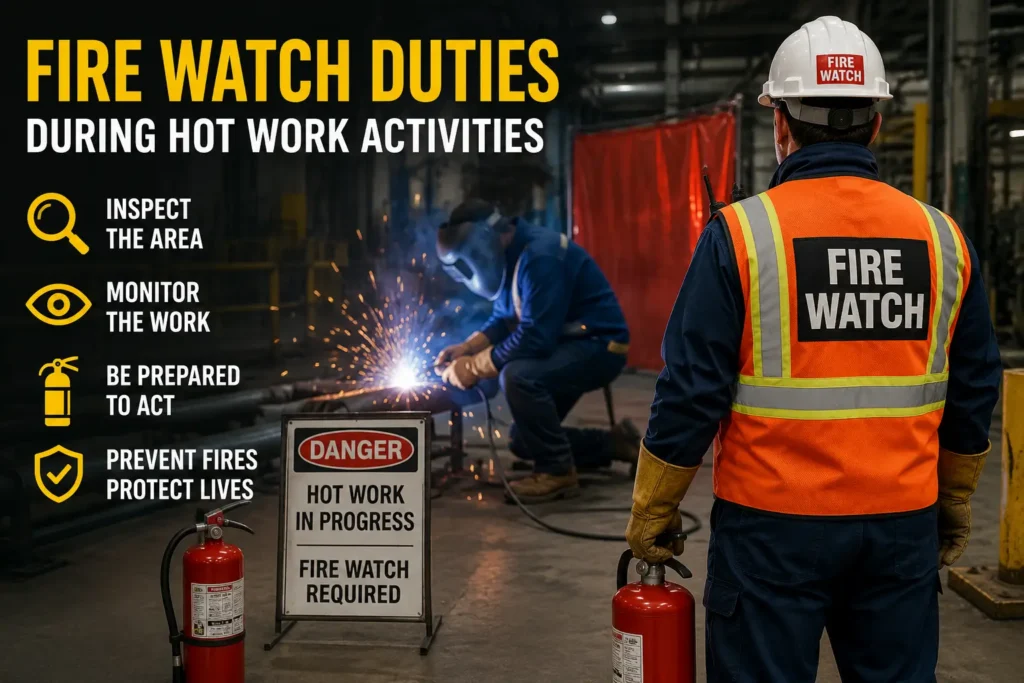
Fire Watch Duties During Hot Work Activities
Hot work activities such as welding, gas cutting, grinding, brazing, soldering, and thermal heating are common in construction sites, factories, shipyards, oil and gas facilities, warehouses, and industrial plants. These tasks are essential for fabrication, maintenance, and repair operations, but they also create serious fire and explosion hazards. Sparks, molten metal, open flames, and hot surfaces generated during hot work can ignite combustible materials within seconds. That is why understanding the fire watch duties during hot work activities is critical for workplace safety.
Many workplace fires begin not during the actual welding or cutting process, but shortly after the work has ended. A small spark may travel behind equipment, beneath flooring, or into hidden combustible materials where it continues smoldering unnoticed. Workers may complete the task and leave the area believing everything is safe, only for a fire to start later. This is exactly why trained fire watch personnel are essential during hot work operations.
According to OSHA and industrial fire safety organizations, hot work activities continue contributing to serious workplace fires and property damage worldwide.
The dangerous part about hot work is that sparks can travel surprisingly far and ignite materials hidden from immediate view. Combustible dust, oily rags, packaging materials, wooden structures, fuel vapors, and chemical residues all create potential fire hazards around welding and cutting operations.
Think of a fire watch like a safety guard standing beside a campfire in a dry forest. Even after the flames appear extinguished, someone must remain alert to ensure hidden embers do not restart the fire later. Fire watch personnel perform the same role in industrial environments by monitoring for hidden ignition sources before, during, and after hot work activities.
The good news is that most hot work fires are preventable when trained fire watch personnel perform their duties correctly and consistently.
Understanding Hot Work Activities
Hot work refers to any activity capable of producing sparks, flames, heat, or ignition sources that may cause fires or explosions. These activities are common during fabrication, repair, maintenance, and construction operations.
Workers often become familiar with welding and cutting tasks because they happen regularly in industrial environments. Unfortunately, routine exposure sometimes causes workers to underestimate the fire risks associated with hot work. A single spark landing on combustible material may quietly smolder for several minutes before developing into a major fire.
Imagine throwing a burning ember into dry grass during windy weather. The ember may appear harmless initially, but hidden heat can spread gradually until flames erupt unexpectedly. Hot work creates similar dangers because sparks and molten metal may travel far beyond the immediate work area.
What Is Hot Work?
Hot work activities commonly include:
- Welding
- Gas cutting
- Grinding
- Brazing
- Soldering
- Torch heating
These operations generate ignition sources capable of igniting nearby combustible materials quickly.
Why Hot Work Creates Fire Hazards
Hot work creates fire hazards because of:
- Sparks
- Molten slag
- Open flames
- Hot surfaces
- Electrical arcs
Sparks may travel several meters from the work area and ignite hidden combustible materials without immediate detection.
Fire hazards may remain active long after work stops because smoldering materials continue burning unnoticed.
Understanding Fire Watch Responsibilities
Fire watch personnel play one of the most important roles during hot work activities.
What Is a Fire Watch?
A fire watch is a trained person assigned to monitor hot work activities for fire hazards before, during, and after operations.
Fire watch personnel remain dedicated specifically to fire prevention and emergency response during hot work.
Their primary responsibility is ensuring sparks or heat sources do not ignite combustible materials.
Why Fire Watch Is Important
Fire watch personnel help detect fires early before they spread uncontrollably.
Without fire watch monitoring:
- Small fires may remain unnoticed
- Sparks may ignite hidden materials
- Delayed response may worsen incidents
Many industrial fires start after workers leave because hidden sparks continue smoldering.
Fire watch duties provide continuous monitoring during high-risk activities.
Common Fire Hazards During Hot Work
Understanding workplace fire hazards helps fire watch personnel identify dangerous conditions early.
Sparks and Molten Metal
Welding and grinding produce sparks capable of igniting combustible materials instantly.
Molten metal droplets may fall into:
- Cracks
- Floor openings
- Waste materials
- Hidden storage areas
Even tiny sparks may create dangerous fires later.
Flammable Liquids and Vapors
Hot work near fuels, solvents, chemicals, or gas vapors creates major explosion risks.
Flammable vapors may ignite rapidly when exposed to sparks or heat sources.
Confined spaces become especially dangerous when ventilation is poor.
Hidden Combustible Materials
Combustible materials may remain hidden:
- Behind walls
- Under floors
- Inside equipment
- Above ceilings
Fire watch personnel must monitor areas beyond the immediate hot work location.
Combustible Dust Hazards
Dust from wood, grain, chemicals, or metals may ignite explosively when exposed to sparks.
Dust hazards are often overlooked because accumulations may appear harmless initially.
Suspended combustible dust can create explosive atmospheres.
Gas Cylinder Hazards
Gas cylinders used during welding operations may leak or become exposed to heat.
Hazards include:
- Cylinder explosions
- Gas leaks
- Flashback fires
Cylinder safety is critical during hot work operations.
OSHA Requirements for Fire Watch Personnel
OSHA establishes hot work safety requirements to reduce workplace fires and explosions.
OSHA Hot Work Standards
OSHA requires fire watch personnel when:
- Combustible materials are nearby
- Sparks may travel beyond the work area
- Fire hazards cannot be eliminated completely
Fire watch personnel must remain properly trained and equipped.
Employer Responsibilities
Employers must provide:
| Employer Responsibility | Purpose |
|---|---|
| Fire watch personnel | Monitor fire hazards |
| Fire extinguishers | Emergency response |
| Worker training | Improve hazard awareness |
| Hot work permits | Control hazardous activities |
| PPE | Protect workers |
Strong fire prevention programs significantly reduce industrial fire risks.
Fire Watch Duties During Hot Work Activities
Fire watch personnel perform several critical responsibilities before, during, and after hot work.
Inspect the Work Area Before Hot Work Begins
Before work starts, fire watch personnel should inspect the area carefully for:
- Combustible materials
- Gas hazards
- Ventilation issues
- Hidden fire risks
Early inspections help identify hazards before sparks are generated.
Identify Fire Hazards
Fire watch personnel should evaluate surrounding conditions including:
- Nearby chemicals
- Dust accumulations
- Flammable liquids
- Wooden structures
- Fuel containers
Hazard identification improves fire prevention significantly.
Ensure Fire Extinguishers Are Available
Appropriate fire extinguishers should remain immediately accessible during operations.
Fire watch personnel should verify:
- Extinguishers are charged
- Equipment is functional
- Workers know extinguisher locations
Quick access improves emergency response effectiveness.
Monitor Sparks and Hot Materials
During operations, fire watch personnel should observe:
- Spark movement
- Hot slag
- Molten metal
- Heat exposure areas
Continuous monitoring helps detect ignition hazards quickly.
Watch Adjacent Areas for Hidden Fires
Fires may start behind walls, beneath floors, or inside nearby equipment.
Fire watch personnel should monitor surrounding areas carefully for smoke, heat, or unusual odors.
Hidden fires are among the most dangerous hot work hazards.
Maintain Communication with Workers
Clear communication between welders, supervisors, and fire watch personnel is essential.
Workers should immediately report unsafe conditions or fire hazards.
Good communication improves coordination during emergencies.
Stop Unsafe Work Immediately
Fire watch personnel should stop operations if:
- Unsafe conditions develop
- Sparks reach combustible materials
- Ventilation becomes inadequate
- Fire hazards increase
Unsafe work should never continue simply to save time.
Monitor the Area After Work Completion
One of the most important fire watch duties is post-work monitoring.
Many fires start after hot work ends because sparks remain active unnoticed.
Fire watch personnel should continue monitoring the area for the required duration after work completion according to company procedures or permit requirements.
Activate Emergency Response if Necessary
If fires occur, fire watch personnel should:
- Raise alarms immediately
- Use extinguishers safely
- Notify emergency responders
- Assist evacuation procedures
Fast response helps prevent fire escalation.
Important Equipment for Fire Watch Personnel
Fire watch personnel require proper equipment to perform duties safely and effectively.
Fire Extinguishers
Suitable extinguishers should match the fire hazards present.
Workers should understand extinguisher operation and fire classifications.
Improper extinguisher selection may worsen incidents.
Communication Devices
Radios or communication systems help fire watch personnel contact supervisors and emergency responders quickly.
Fast communication improves emergency coordination significantly.
PPE Requirements
Fire watch personnel may require PPE such as:
- Hard hats
- Safety glasses
- Gloves
- Flame-resistant clothing
- Safety footwear
PPE protects personnel from sparks and workplace hazards.
Common Fire Watch Mistakes
Many hot work fires happen because fire watch responsibilities are ignored or performed poorly.
Leaving the Area Too Early
Some fire watch personnel leave immediately after welding or cutting stops.
Unfortunately, hidden sparks may continue smoldering unnoticed.
Post-work monitoring is one of the most important fire prevention steps.
Lack of Attention During Monitoring
Fire watch personnel should remain fully focused on fire hazards.
Distractions such as phones, unrelated tasks, or conversations reduce monitoring effectiveness significantly.
Continuous attention is essential during hot work operations.
Best Practices for Effective Fire Watch Safety
Strong fire prevention programs combine permits, inspections, supervision, training, and worker involvement.
Toolbox talks before hot work activities help reinforce hazards and clarify fire watch responsibilities daily. Even experienced workers benefit from regular reminders because routine tasks often create overconfidence.
Technology is improving hot work safety through thermal imaging cameras, gas monitoring systems, automated fire detection, and digital permit systems. However, technology cannot replace alert fire watch personnel and disciplined safety behavior.
Companies with strong safety cultures encourage workers to stop unsafe work immediately and report hazards without fear of punishment.
Effective fire watch safety is not about slowing operations. It is about preventing devastating fires, explosions, injuries, and property losses.
Conclusion
Fire watch duties during hot work activities play a critical role in preventing workplace fires and protecting workers, equipment, and facilities from catastrophic incidents. Welding, cutting, grinding, and other hot work operations continuously create ignition sources capable of causing fires long after work appears finished.
Fire watch personnel help identify hazards, monitor sparks, inspect surrounding areas, maintain emergency readiness, and respond quickly if fires develop.
Most hot work fires are preventable through proper inspections, permit systems, fire watch monitoring, worker training, and disciplined safety practices.
Workers should never underestimate the importance of fire watch duties because even a single unnoticed spark can quickly escalate into a major industrial disaster.
Every fire prevented, every hazard identified, and every safe hot work operation completed represents another workplace protected from harm. That is the true purpose of fire watch safety.
Hot Work Safety Precautions for Construction Sites
FAQs
1. What is a fire watch during hot work?
A fire watch is a trained person assigned to monitor hot work activities for fire hazards before, during, and after operations.
2. Why is fire watch important during welding?
Fire watch personnel help detect sparks, hidden fires, and ignition hazards early before fires spread uncontrollably.
3. What equipment should fire watch personnel have?
Fire watch personnel should have fire extinguishers, communication devices, and appropriate PPE.
4. Why must fire watch continue after hot work ends?
Hidden sparks and smoldering materials may ignite fires after welding or cutting operations stop.
5. Can fire watch personnel perform other tasks during monitoring?
No. Fire watch personnel should remain fully focused on monitoring fire hazards during hot work activities.
