 Skip to content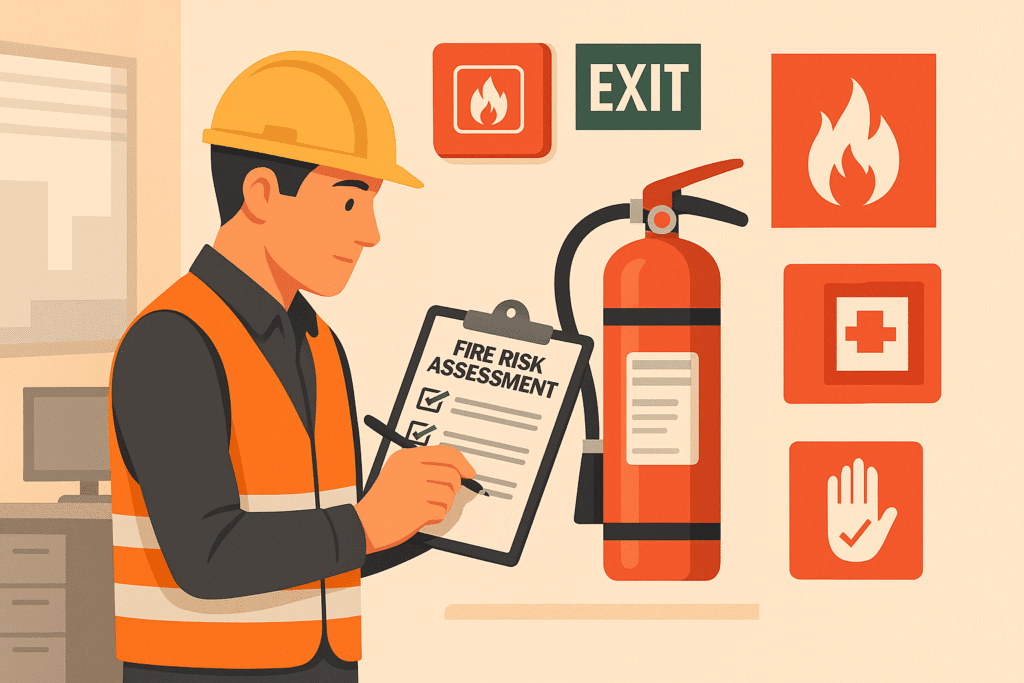
Fire Risk Assessment in the Workplace – Complete Guide
Every workplace, whether it’s a manufacturing plant, office, construction site, or warehouse, faces the potential risk of fire. Fires can lead to catastrophic losses — not just in property damage but also in human life, reputation, and business continuity.
That’s where a Fire Risk Assessment (FRA) becomes essential. Conducting a proper fire risk assessment helps identify fire hazards, evaluate existing controls, and implement preventive measures to protect employees, property, and the environment.
In this complete guide, you’ll learn:
- What a fire risk assessment is
- Why it’s required by law
- The five key steps in the assessment process
- Common fire hazards in workplaces
- Control measures and fire prevention strategies
- Free checklist template for implementation
Let’s begin by understanding the basics.
What is a Fire Risk Assessment?
A Fire Risk Assessment (FRA) is a systematic process to identify potential fire hazards in a workplace, assess the level of risk, and implement measures to eliminate or reduce those risks to an acceptable level.
It forms the foundation of an organization’s fire safety management system and is a key component of overall workplace risk management.
Definition (as per UK Regulatory Reform Fire Safety Order 2005):
“A fire risk assessment is an organized and methodical look at your premises, the activities carried out there, and the likelihood that a fire could start and cause harm to those in and around the premises.”
Legal Requirements for Fire Risk Assessment
Almost all countries have fire safety legislation mandating fire risk assessments for workplaces.
International Standards:
- UK: Regulatory Reform (Fire Safety) Order 2005 – Employers must conduct FRA and keep it up to date.
- UAE: Fire and Life Safety Code – Mandates fire safety plans and emergency evacuation routes.
- India: National Building Code (NBC) 2016 and Factories Act 1948 – Requires fire safety provisions and drills.
- OSHA (USA): 29 CFR 1910.39 – Employers must develop and maintain a fire prevention plan.
Key Legal Obligations for Employers:
- Identify fire hazards and risk sources.
- Evaluate people at risk.
- Eliminate or control fire hazards.
- Maintain fire protection systems.
- Train employees in fire safety and emergency response.
- Review and update the fire risk assessment periodically.
Failure to comply can result in prosecution, penalties, and potential closure of the workplace.
Objectives of Fire Risk Assessment
A well-executed FRA aims to:
- Identify potential ignition sources and flammable materials.
- Evaluate the likelihood of fire occurrence.
- Assess the potential consequences of a fire incident.
- Recommend suitable control and prevention measures.
- Ensure compliance with fire safety legislation.
- Protect people, property, and the environment.
Common Fire Hazards in the Workplace
Every workplace has specific hazards depending on its activities, but common fire hazards include:
| Fire Hazard | Examples | Possible Causes |
|---|---|---|
| Electrical Faults | Loose wiring, overloaded circuits, damaged cables | Poor maintenance, overloading, short circuit |
| Flammable Materials | Paints, solvents, fuels, chemicals | Improper storage, leakage, heat exposure |
| Smoking | Cigarette butts, open flames | Unauthorized smoking areas |
| Hot Work | Welding, grinding, cutting | Sparks igniting nearby combustibles |
| Heating Equipment | Boilers, heaters, furnaces | Overheating, poor ventilation |
| Cooking Equipment | Industrial kitchens, canteens | Oil spills, unattended stoves |
| Waste Accumulation | Paper, packaging, wood | Poor housekeeping |
| Human Error | Carelessness, improper handling of materials | Lack of training or supervision |
The 5 Key Steps of Fire Risk Assessment
Fire risk assessment can be broken into five clear, structured steps recommended by fire authorities worldwide.
Step 1: Identify Fire Hazards
Look for sources of ignition, fuel, and oxygen — the three elements of the fire triangle.
- Sources of ignition: Electrical equipment, naked flames, sparks, hot surfaces.
- Sources of fuel: Flammable liquids, wood, paper, plastic, textiles, chemicals.
- Sources of oxygen: Natural air, oxidizing chemicals, compressed oxygen cylinders.
Example:
In a manufacturing unit, potential hazards may include welding sparks, paint thinners, and poor ventilation near fuel storage.
Tip: Use a workplace fire hazard checklist to systematically inspect all areas.
Step 2: Identify People at Risk
Determine who might be harmed in the event of a fire:
- Employees working near fire sources.
- Visitors, contractors, and customers.
- People with disabilities or restricted mobility.
- Workers on night shifts or isolated areas.
Example:
In a multi-storey office, receptionists, cleaners, or maintenance staff may be more vulnerable due to their location or working hours.
Tip: Map escape routes and identify anyone who might need assistance during evacuation.
Step 3: Evaluate, Remove, Reduce, and Protect from Fire Risks
Once hazards and people at risk are identified, evaluate the likelihood and severity of a fire and decide what needs to be done.
Key Actions:
- Remove ignition sources (e.g., faulty wiring, open flames).
- Reduce flammable materials by proper storage or substitution.
- Isolate ignition sources from fuels using physical barriers.
- Implement protective systems like fire alarms, sprinklers, and extinguishers.
- Provide emergency lighting, signage, and clear escape routes.
Fire Control Measures:
- Regular inspection of electrical systems.
- Proper storage of flammable substances.
- Installation of smoke and heat detectors.
- Use of fire-resistant construction materials.
- Maintaining unobstructed exits and fire doors.
Tip: Always maintain the “Means of Escape” — it’s your first line of defense during an emergency.
Step 4: Record, Plan, and Train
After identifying and controlling risks, document your findings. A written record helps in legal compliance and future reviews.
Include in Your Fire Risk Assessment Record:
- Hazards identified
- People at risk
- Control measures implemented
- Emergency evacuation plan
- Fire drills and training records
- Maintenance schedules for fire safety systems
Fire Emergency Plan Should Cover:
- Fire alarm activation procedure
- Evacuation routes and assembly points
- Role of fire wardens and emergency teams
- Contact details of emergency services
Training:
All staff must receive fire safety training at induction and refresher intervals. Conduct mock drills every 6–12 months to test readiness.
Tip: Assign designated Fire Wardens or Marshals for each department.
Step 5: Review and Update Regularly
A fire risk assessment is not a one-time exercise. It must be reviewed:
- Annually or biannually.
- After a significant change (e.g., renovation, layout change, new process).
- After a fire incident or near miss.
Regular review ensures that control measures remain effective and relevant to current risks.
Tip: Keep an updated copy accessible to all employees and emergency responders.
Fire Risk Assessment Template (Example)
Below is a simplified example of how to record your findings.
| Activity/Area | Fire Hazard | Persons at Risk | Risk Level (L/M/H) | Control Measures | Responsible Person | Status |
|---|---|---|---|---|---|---|
| Welding Bay | Sparks, gas cylinders | Welders, nearby workers | High | Provide fire blankets, segregate area, keep extinguishers nearby | Safety Officer | Ongoing |
| Paint Storage | Flammable liquids | Storekeepers | High | Store in ventilated area, no smoking, use flameproof cabinets | Store In-charge | Controlled |
| Office Area | Electrical short circuit | Staff, visitors | Medium | Regular inspection, avoid overloading sockets | Maintenance Supervisor | Controlled |
| Canteen | Cooking oil fire | Kitchen staff | Medium | Provide Class K extinguisher, train staff | Catering Head | Controlled |
Fire Prevention Strategies
A good fire risk assessment should lead to proactive fire prevention.
1. Good Housekeeping
- Dispose of waste regularly.
- Keep escape routes clear.
- Avoid unnecessary storage near exits or electrical panels.
2. Electrical Safety
- Inspect and maintain wiring systems.
- Use only certified appliances.
- Avoid daisy-chaining extension cords.
3. Storage and Handling of Flammable Materials
- Label and segregate all chemicals.
- Keep away from ignition sources.
- Use proper ventilation and flame-proof cabinets.
4. Hot Work Control
- Use Hot Work Permits before welding, cutting, or grinding.
- Keep fire watch personnel during and after work.
5. Smoking Policy
- Create designated smoking areas away from fuel or waste.
- Provide metal ashtrays with lids.
6. Fire Safety Equipment
- Install and maintain extinguishers, alarms, and sprinklers.
- Clearly label the type of extinguisher for each hazard (A, B, C, D, K).
7. Employee Training and Awareness
- Conduct regular fire safety drills.
- Display evacuation maps and emergency numbers.
- Encourage a “See it, Report it” culture for hazards.
Fire Emergency Preparedness
Even with good prevention, fires can still happen. Preparedness minimizes damage and saves lives.
Fire Emergency Plan Must Include:
- Alarm and Communication System:
- Audible alarm accessible to all areas.
- Clear communication chain to alert emergency services.
- Evacuation Procedure:
- Designated escape routes and exits.
- Assembly points clearly marked.
- Disabled access provisions.
- Emergency Roles:
- Fire Wardens to guide evacuations.
- First-aid responders on standby.
- Security to assist emergency teams.
- Fire Fighting Equipment:
- Correct extinguishers (ABC type).
- Hose reels, hydrants, and sprinkler systems maintained regularly.
- Training and Drills:
- Conduct fire drills twice a year.
- Evaluate response time and identify improvement areas.
Fire Risk Rating Matrix
| Severity (S) | Likelihood (L) | Risk Rating (S × L) | Action Required |
|---|---|---|---|
| 1 = Minor damage | 1 = Rare | 1–4 = Low | Maintain routine controls |
| 2 = Moderate injury | 2 = Possible | 5–9 = Medium | Review and improve controls |
| 3 = Major injury/fatality | 3 = Likely | 10–15 = High | Immediate action required |
| 4 = Multiple fatalities | 4 = Almost certain | 16+ = Very High | Stop work immediately |
Fire Safety Inspection Checklist (Sample)
Use this quick checklist for periodic fire safety audits:
Fire extinguishers properly located and inspected monthly
Emergency exits clearly marked and unobstructed
Fire alarm system tested and functional
Emergency lights operational
Flammable materials stored correctly
Smoking only in designated areas
Electrical wiring inspected and maintained
Fire drills conducted regularly
Fire warden list displayed
Fire evacuation plan visible in all departments
Documentation and Record Keeping
Maintain all records related to fire safety, including:
- FRA reports and reviews
- Fire equipment inspection logs
- Drill reports and attendance sheets
- Training records
- Maintenance certificates for fire systems
These records not only ensure legal compliance but also serve as evidence of proactive management during audits or investigations.
Common Mistakes in Fire Risk Assessment
- Conducting FRA only once and never reviewing it.
- Not involving workers in hazard identification.
- Inadequate documentation or missing control actions.
- Ignoring small fire hazards like clutter or paper piles.
- Failing to maintain extinguishers and alarms.
- Incomplete emergency procedures for disabled persons.
- Overlooking training for new employees and contractors.
Real-Life Example: Fire Risk Assessment in a Factory
A medium-sized paint manufacturing plant conducted a fire risk assessment after a near-miss incident involving solvent fumes.
Findings:
- Storage of flammable solvents near welding area.
- Damaged electrical wiring near mixing tanks.
- Lack of mechanical ventilation in chemical storage.
Control Measures:
- Segregated chemical storage from hot work area.
- Replaced damaged cables and installed ELCB.
- Implemented ventilation system with gas detectors.
- Conducted fire drill and refresher training.
Result:
The overall fire risk rating reduced from “High” to “Low” within 2 months, and the company achieved compliance certification.
Review Frequency & Responsibility
| Action | Frequency | Responsible Person |
|---|---|---|
| Fire Risk Assessment Review | Annually or after change | Safety Officer |
| Fire Equipment Inspection | Monthly | Maintenance Supervisor |
| Fire Drill | Every 6 months | HSE Department |
| Training & Induction | Quarterly | HR & HSE Trainer |
| Fire Alarm System Testing | Weekly | Electrical Maintenance |
| Fire Safety Audit | Yearly | External Auditor |
External Reference
Internal Links
- Emergency Response Plans: What Every Facility Should Include (and Often Misses)
- Behavior Based Safety Programs: How to Design, Implement, and Sustain for Workplace Excellence
- Top 10 Common Errors During Risk Assessments and How to Avoid Them
- Internal vs External Audits: Best Practices and Pitfalls for Safety Professionals
- HIRA Generator Tool – The Ultimate Guide to Hazard Identification & Risk Assessment for Safety Professionals
Conclusion
A Fire Risk Assessment is more than a legal formality — it’s a life-saving process that ensures your workplace is prepared to prevent, respond to, and recover from fire emergencies.
By following the five-step assessment method, keeping proper documentation, training employees, and maintaining safety equipment, you create a culture of fire safety awareness that protects everyone.
Remember:
“Prevention is better than firefighting.”
Conduct your fire risk assessment today — before a fire reminds you why it was necessary.
