 Skip to content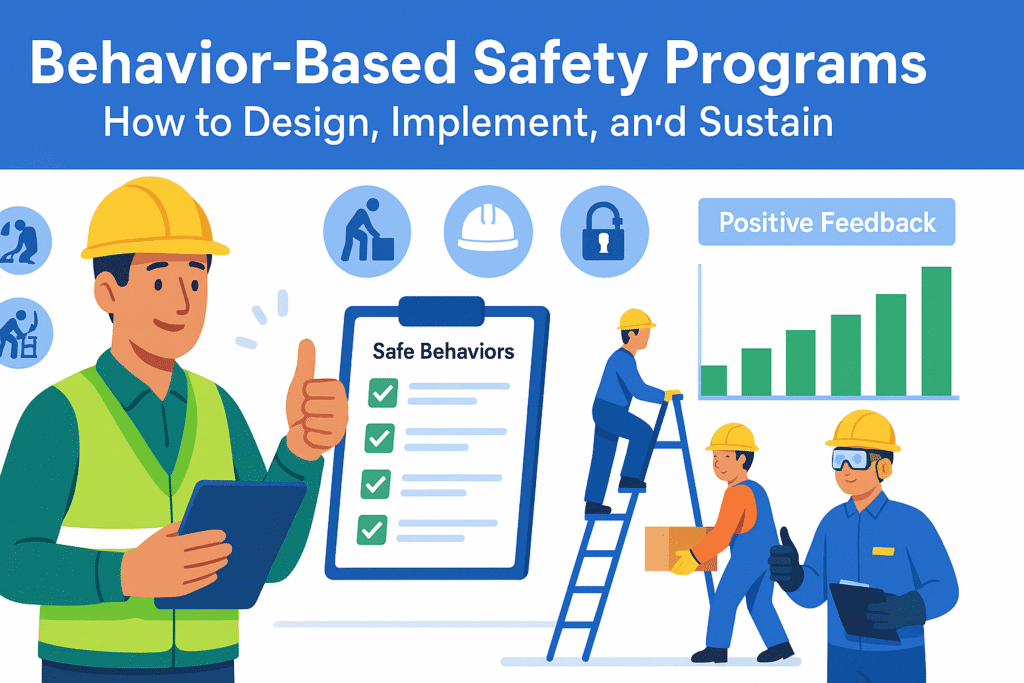
Behavior Based Safety Programs: How to Design, Implement, and Sustain for Workplace Excellence
Traditional safety approaches often focus on equipment, procedures, and compliance. While essential, these factors overlook the human element—the behaviors that drive day-to-day safety performance. Behavior Based Safety (BBS) programs address this gap by focusing on what people do, why they do it, and how to influence safer actions. This article explains how to design, implement, and sustain effective BBS programs that create lasting safety culture improvements.
What Is a Behavior Based Safety Program?
Behavior Based Safety (BBS) is a proactive process that involves observing employees’ safety-related behaviors, providing feedback, and using data to reinforce safe practices and correct unsafe ones. Instead of blaming individuals, BBS seeks to understand and modify the factors that influence behavior.
Key Elements:
- Systematic observation of work practices
- Open feedback between observers and employees
- Data-driven analysis to identify trends
- Positive reinforcement to encourage safe behavior
Example: In a warehouse, observers note how workers handle loads. They praise proper lifting techniques and coach those bending incorrectly to reduce back injuries.
Why BBS Programs Matter
- Human Factor Focus: Addresses unsafe acts, which contribute to the majority of workplace incidents.
- Employee Engagement: Involves workers directly in safety, increasing ownership.
- Early Warning System: Identifies at-risk behaviors before they result in injuries.
- Continuous Improvement: Provides real-time data to refine training and processes.
How to Design a Behavior Based Safety Program
1. Secure Management Commitment
- Gain visible support from senior leaders.
- Allocate resources for training, data collection, and communication.
- Demonstrate that BBS complements—not replaces—existing safety systems.
2. Form a Cross-Functional Team
- Include supervisors, frontline workers, safety professionals, and union reps if applicable.
- Ensure diversity of perspectives to build trust and buy-in.
3. Define Critical Behaviors
- Identify high-risk tasks and behaviors that lead to injuries (e.g., working at height without harness, improper lockout/tagout).
- Use incident data, near-miss reports, and job hazard analyses to select behaviors.
4. Develop Observation Checklists
- Create simple, task-specific checklists for observers.
- Focus on key behaviors rather than exhaustive lists.
- Keep it short (no more than 10–15 items) for usability.
5. Train Observers
- Teach how to conduct observations discreetly and respectfully.
- Emphasize positive reinforcement and constructive feedback.
- Provide practice sessions before going live.
How to Implement a Behavior-Based Safety Program
1. Pilot the Program
- Start in one department or site to test your approach.
- Gather feedback and refine checklists and processes before scaling up.
2. Conduct Regular Observations
- Set a target number of observations per week.
- Vary observation times to capture a realistic picture.
- Encourage peer-to-peer observations, not just supervisor-led.
3. Provide Immediate Feedback
- Praise safe behaviors on the spot.
- Address unsafe behaviors privately and constructively.
- Focus on “why” the behavior occurred, not just “what” happened.
4. Collect and Analyze Data
- Enter observation data into a database or software.
- Identify trends and prioritize corrective actions.
- Share results in safety meetings and dashboards.
5. Communicate Progress
- Post charts showing improvements in safe behaviors.
- Celebrate milestones and recognize individuals or teams for participation.
- Reinforce management’s visible support.
How to Sustain a Behavior-Based Safety Program
- Maintain Leadership Support: Regularly update management on outcomes and ROI.
- Refresh Training: Rotate observers, provide refresher courses, and train new employees.
- Integrate with Other Safety Systems: Link BBS data to risk assessments, audits, and incident investigations.
- Evolve the Program: Periodically review and update target behaviors and checklists.
- Recognize and Reward Participation: Celebrate contributions to sustain enthusiasm and engagement.
Example: A construction company introduces a “Safety Star” award for workers with outstanding participation in BBS observations and suggestions.
Best Practices
- Keep the program voluntary at first to build trust.
- Avoid using BBS for disciplinary purposes; focus on learning and improvement.
- Ensure anonymity in data reporting to reduce fear of blame.
- Involve contractors as well as employees to create a consistent safety culture.
- Use technology (apps, tablets) to streamline data collection and reporting.
Common Pitfalls to Avoid
- Lack of Management Follow-Through: Initial enthusiasm fades without ongoing support.
- Too Many Behaviors to Track: Overly complex checklists overwhelm observers.
- Ignoring Feedback Data: Collecting observations but not acting on trends.
- Blame Culture: Using BBS data to punish rather than improve undermines trust.
Conclusion
Behavior Based Safety Programs are powerful tools for reducing incidents and strengthening safety culture when designed thoughtfully, implemented carefully, and sustained over time. By focusing on critical behaviors, engaging employees, and using data for continuous improvement, organizations can move from compliance to excellence in safety performance.
External Link: OSHA Safety and Health Programs (https://www.osha.gov/safety-management)
Contractor Safety Management: Aligning External Contractors with Your Safety System
Behavioral Safety Observations: How to Integrate Them into Audits
Why First Aid Training Matters — and How to Conduct It Effectively
Personal Protective Equipment PPE Compliance Checklist – Free Template
Exam-Oriented Practice Questions with Answers
Short Answer Questions
- What is the main focus of a Behavior Based Safety (BBS) program?
Answer: Observing and influencing employee behaviors to promote safe practices and reduce incidents. - List two key elements of a successful BBS program.
Answer: (i) Systematic observation of work practices; (ii) Immediate feedback with positive reinforcement. - Why should BBS programs avoid being used for disciplinary purposes?
Answer: It undermines trust and discourages participation, reducing the program’s effectiveness.
Long Answer Questions
- Explain the steps involved in designing a Behavior-Based Safety program.
Answer: Secure management commitment, form a cross-functional team, define critical behaviors based on risk, develop simple observation checklists, and train observers in respectful observation and feedback. - Discuss how to implement and scale up a BBS program in an organization.
Answer: Pilot the program in one area, conduct regular observations, provide immediate feedback, collect and analyze data for trends, communicate progress to all stakeholders, and gradually expand across the organization. - Describe strategies for sustaining a BBS program over the long term.
Answer: Maintain leadership support, refresh training, integrate BBS with other safety systems, update target behaviors, and recognize participant contributions to keep engagement high.
Scenario-Based Questions
- You’re launching a BBS program at a new site. Some workers fear it will be used to punish them. How do you address this?
Answer: Communicate clearly that BBS is for improvement, not discipline; ensure anonymity in data; focus on positive reinforcement; involve workers in developing the program. - Data shows a recurring unsafe lifting behavior despite repeated feedback. What’s your next step?
Answer: Investigate root causes (training, workload, ergonomics), adjust controls or provide additional equipment, and reinforce proper technique through targeted coaching. - Your observation team is overwhelmed by a 30-item checklist. How do you improve the program?
Answer: Simplify the checklist to focus on the most critical behaviors, rotate items periodically, and provide refresher training to make observations more manageable and effective.
