 Skip to content
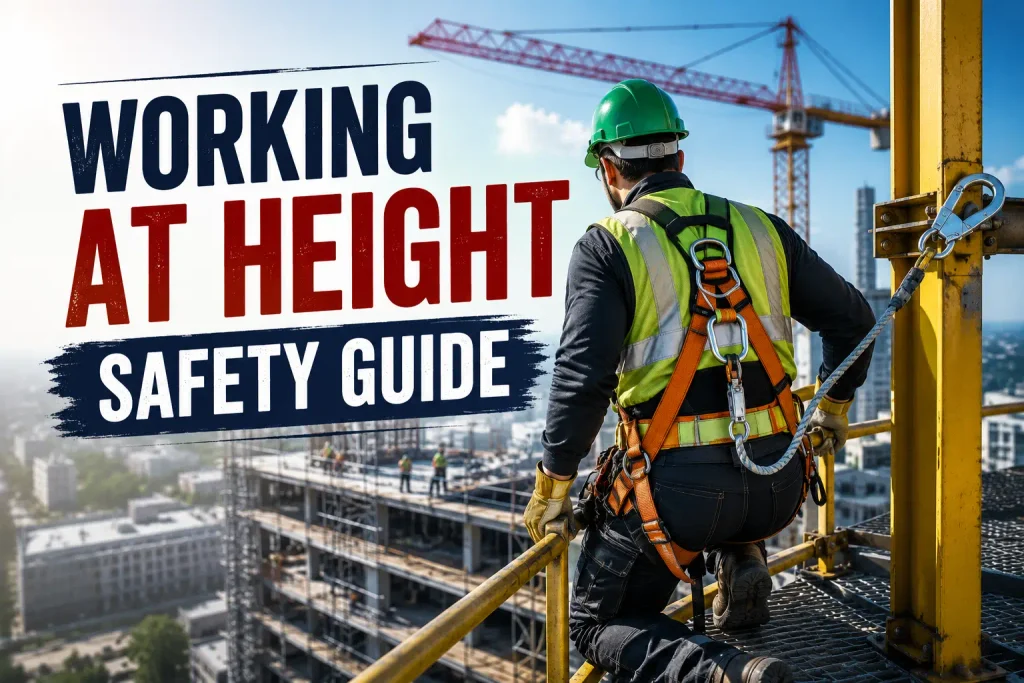
Working at Height Safety Guide
Working at height is one of the most common high risk activities across construction, maintenance, oil and gas, manufacturing, utilities, and infrastructure projects. A worker does not need to be several metres above the ground for an activity to become dangerous. A fall from a relatively low level can still result in serious injury or death, particularly when the person lands on concrete, machinery, sharp objects, or other hazardous surfaces.
Working at height safety is therefore not simply about wearing a harness. It involves planning the work, identifying hazards, selecting appropriate equipment, controlling access, providing competent supervision, and ensuring that workers understand how to perform the task safely.
What Is Working at Height?
Meaning of Working at Height
Working at height generally refers to any work where a person could fall from one level to another and suffer injury. The activity may involve ladders, scaffolds, elevated platforms, roofs, temporary structures, mobile elevating work platforms, or other locations where a fall is possible.
The important point is the presence of a fall hazard rather than the exact height.
Common Examples of Work at Height
Typical activities include:
- Working on scaffolding.
- Installing steel structures.
- Working on roofs.
- Using ladders.
- Working from elevated platforms.
- Installing or repairing pipelines.
- Painting high level structures.
- Performing maintenance on tanks.
- Working from mobile elevating work platforms.
- Installing electrical or mechanical equipment at elevated locations.
Why Is Working at Height Dangerous?
Risk of Falls
The most obvious hazard is falling from an elevated working position. A fall can result in fractures, spinal injuries, head injuries, permanent disability, or fatality.
Falling Objects
Tools, materials, bolts, pipes, and equipment can fall from an elevated work area and strike people below. The risk becomes greater when the work area is above a busy access route.
Unsafe Access
Improper ladders, incomplete scaffolds, damaged access equipment, or climbing on unsuitable structures can create serious risks before the work even begins.
Poor Weather Conditions
Wind, rain, snow, ice, and poor visibility can make elevated work significantly more dangerous. Wet surfaces can also increase the likelihood of slipping.
Unstable Working Platforms
An unstable platform, improperly erected scaffold, damaged floor, or unsuitable temporary structure can collapse or cause a worker to lose balance.
Planning Work at Height
Conduct a Risk Assessment
Before work starts, the task should be assessed systematically. The assessment should identify what could cause harm, who could be affected, and what controls are required.
The assessment should consider:
- Fall hazards.
- Access and egress.
- Condition of the work surface.
- Weather conditions.
- Falling objects.
- Nearby electrical systems.
- Equipment condition.
- Work positioning.
- Emergency arrangements.
- Rescue requirements.
Prepare a Safe Work Method
A suitable method statement or safe work procedure should explain how the task will be performed safely. Workers should understand the procedure before beginning the activity.
Select Competent Workers
Work at height should be performed by people who have the appropriate knowledge, training, skills, and experience for the task and equipment involved.
Hierarchy of Controls for Working at Height
Avoid Working at Height
The safest option is to eliminate the need to work at height whenever reasonably practicable.
For example, equipment may be assembled at ground level before being lifted into position. Maintenance work may also be completed from ground level using suitable tools or remote equipment.
Prevent the Fall
If working at height cannot be avoided, priority should be given to measures that prevent a person from falling.
Examples include:
- Guardrails.
- Properly designed scaffolds.
- Working platforms.
- Edge protection.
- Suitable access platforms.
- Covers over openings.
Minimise the Consequences
Where the risk of falling cannot be completely prevented, suitable systems should be used to reduce the consequences.
Examples include:
- Personal fall arrest systems.
- Safety nets.
- Suitable rescue systems.
- Fall restraint equipment.
Scaffolding Safety
Scaffold Inspection
Scaffolding should be erected, modified, and dismantled by competent persons. It should be inspected according to applicable legal and organizational requirements, particularly after events that could affect its stability.
Workers should check for obvious problems such as:
- Missing guardrails.
- Missing toe boards.
- Damaged components.
- Inadequate access.
- Unstable foundations.
- Excessive loading.
- Unauthorised modifications.
Safe Scaffold Access
Workers should use designated access points. Climbing on scaffold tubes, guardrails, or external structural members should never be treated as a normal means of access.
Scaffold Loading
Scaffolds should not be overloaded with materials. Excessive loading can affect stability and may create additional trip hazards.
Ladder Safety
Choosing the Correct Ladder
A ladder should be suitable for the task, inspected before use, and positioned on a stable surface.
The correct type and length should be selected rather than improvising with unsuitable equipment.
Safe Ladder Positioning
Ladders should be positioned securely and used according to the manufacturer’s instructions. Workers should maintain a stable position and avoid overreaching.
When Not to Use a Ladder
A ladder may be unsuitable when the task requires prolonged work, significant force, heavy materials, or frequent movement. In such situations, a suitable working platform may provide better protection.
Personal Fall Protection Systems
Fall Restraint
A fall restraint system is designed to prevent the worker from reaching a position where a fall could occur.
This can be preferable to allowing a fall and then arresting it.
Fall Arrest
A fall arrest system is designed to stop a worker after a fall has started. It may include a full body harness and compatible connecting equipment.
The system must be properly selected, installed, inspected, and used.
Harness Inspection
Before use, workers should inspect the harness and associated equipment for signs of damage, cuts, burns, chemical contamination, broken stitching, deformation, or other defects.
Damaged equipment should be removed from service according to the organization’s procedure.
Anchor Points and Connection Systems
Use Suitable Anchor Points
Fall protection equipment must be connected to an appropriate anchorage system designed for the intended application.
A worker should never connect a fall arrest system to an unsuitable pipe, handrail, temporary structure, or other unverified point.
Maintain Connection
Where the system requires continuous attachment, workers should understand how to maintain connection while moving between work positions.
This requires appropriate equipment and proper training.
Falling Object Prevention
Secure Tools and Materials
Tools used at height should be secured where appropriate to prevent them from falling. Small objects can cause serious injuries when dropped from an elevated position.
Establish Exclusion Zones
Areas below elevated work should be controlled where falling objects could create a hazard. Barricades, warning signs, and controlled access can help keep people away from the danger zone.
Use Tool Bags and Material Handling Systems
Suitable tool bags, containers, hoists, and material handling arrangements can reduce the likelihood of objects being dropped during elevated work.
Roof Work Safety
Identify Fragile Surfaces
Roof work can involve hidden hazards such as fragile roofing sheets, skylights, openings, and deteriorated surfaces.
Workers should never assume that a roof surface is strong enough simply because it appears intact.
Provide Edge Protection
Open roof edges should be properly protected using suitable control measures. Workers should also be protected from unprotected openings and fragile areas.
Consider Weather Conditions
Roof work should be reassessed when wind, rain, ice, or other environmental conditions make the activity unsafe.
Mobile Elevating Work Platforms
Pre-Use Inspection
Before operating a mobile elevating work platform, the equipment should be checked according to the manufacturer’s instructions and site requirements.
Important checks may include:
- Controls.
- Guardrails.
- Tires or tracks.
- Emergency systems.
- Hydraulic systems.
- Alarms.
- Structural components.
- Access gates.
Operator Competence
Only appropriately trained and authorised personnel should operate the equipment.
Operators should understand the equipment’s limitations, operating controls, ground conditions, and emergency procedures.
Ground Conditions
The equipment should be used on suitable ground conditions. Slopes, soft ground, excavations, overhead hazards, and nearby structures should be assessed before positioning the platform.
Electrical Hazards During Work at Height
Identify Overhead Electrical Lines
Overhead electrical lines can create a serious risk to workers using ladders, scaffolds, cranes, MEWPs, and long materials.
The location of electrical services should be identified before work begins.
Maintain Required Clearance
Suitable safety distances should be maintained in accordance with applicable requirements and the specific electrical system involved.
Where necessary, electrical systems should be isolated or other appropriate controls implemented before work starts.
Training and Competence
Practical Training
Workers should receive training appropriate to the equipment and activities they perform. Training should not be limited to classroom theory.
Practical instruction should cover:
- Equipment selection.
- Correct use.
- Inspection.
- Positioning.
- Fall protection.
- Access and egress.
- Emergency procedures.
Refresher Training
Training should be reinforced when work methods change, unsafe practices are identified, equipment changes, or there is evidence that workers need additional instruction.
Supervision of Work at Height
Competent Supervision
High risk activities require effective supervision. Supervisors should verify that workers are following the approved method and that conditions have not changed.
Stop Work When Conditions Change
A job that was safe in the morning may become unsafe later because of weather, changing site conditions, equipment movement, or modifications to the work area.
Workers and supervisors should have the authority to stop the activity when serious risks arise.
Emergency and Rescue Planning
Why Rescue Planning Matters
A fall arrest system can save a worker from hitting the ground, but the emergency does not end when the fall is arrested.
A suspended worker may remain exposed to serious harm while waiting for rescue. A suitable rescue plan should therefore be established before the work begins.
Rescue Equipment and Personnel
The rescue arrangements should identify:
- How the worker will be rescued.
- Who will perform the rescue.
- What equipment will be required.
- How emergency services will be contacted.
- How access will be maintained.
- What actions are required after the incident.
Workers should understand the emergency arrangements before starting the job.
Common Working at Height Mistakes
Using Damaged Equipment
Using damaged ladders, harnesses, scaffold components, or access equipment can turn a controllable task into a serious incident.
Removing Guardrails
Workers sometimes remove guardrails to make material movement easier. This creates an immediate fall hazard unless an equally effective control is provided.
Overreaching from Ladders or Platforms
Overreaching can shift the worker’s centre of gravity and cause loss of balance.
Carrying Large Materials While Climbing
Carrying bulky materials while climbing can prevent a worker from maintaining proper contact with the ladder and can increase the likelihood of a fall.
Working Without a Rescue Plan
Using fall arrest equipment without considering how a fallen worker will be recovered is an important planning failure.
Role of the Safety Officer
Site Inspection
A Safety Officer should regularly inspect work at height activities and identify unsafe conditions before they result in incidents.
Worker Communication
The Safety Officer should communicate hazards clearly and make sure workers understand the required controls.
Monitoring Compliance
Safety requirements should be monitored throughout the activity, not only during the initial inspection.
Corrective Action
When unsafe conditions are identified, corrective actions should be communicated, implemented, and followed up to confirm that the issue has actually been resolved.
Role of Workers
Follow Safe Work Procedures
Workers have an important responsibility to follow approved procedures and use equipment correctly.
Inspect Equipment Before Use
Workers should check their equipment before use and report defects immediately.
Report Hazards
Loose materials, damaged access equipment, missing guardrails, unstable surfaces, and other hazards should be reported without delay.
Never Take Shortcuts
Many work at height incidents happen when workers take shortcuts to save time. A few minutes saved are never worth the consequences of a serious fall.
Working at Height Safety Checklist
Before Starting Work
- Review the risk assessment.
- Confirm the work method.
- Inspect access equipment.
- Check scaffolding and platforms.
- Verify fall protection arrangements.
- Identify overhead electrical hazards.
- Check weather conditions.
- Establish exclusion zones where required.
- Confirm worker competence.
- Review emergency and rescue arrangements.
During the Work
- Follow the approved procedure.
- Maintain proper access.
- Keep platforms clean and organised.
- Secure tools and materials.
- Use fall protection correctly.
- Maintain required clearances.
- Monitor changing conditions.
- Stop work when an uncontrolled hazard develops.
Building a Strong Work at Height Safety Culture
Make Safety Part of Planning
Work at height safety should be considered during project planning rather than only when workers arrive at the job location.
Encourage Hazard Reporting
Workers should feel comfortable reporting unsafe conditions without fear of blame or retaliation.
Learn From Near Misses
Near misses can reveal weaknesses before someone is seriously injured. Organisations should investigate them and use the lessons to improve controls.
Lead by Example
Managers, supervisors, engineers, and Safety Officers should demonstrate the behaviour expected from workers. A strong safety culture starts with leadership.
Final Thoughts on Working at Height Safety
Working at height requires careful planning, suitable equipment, competent people, effective supervision, and a strong commitment to controlling fall hazards. The safest approach is to eliminate work at height whenever possible. When it cannot be avoided, the work should be planned around preventing falls and minimising their consequences.
A harness alone does not make work at height safe. Real safety comes from understanding the hazards, selecting the right controls, using equipment correctly, maintaining effective communication, and being prepared for emergencies.
Every person involved in work at height has a role to play. When workers, supervisors, engineers, contractors, and Safety Officers work together, many serious incidents can be prevented before they happen.
What Is the Difference Between a Safety Officer and an HSE Engineer?
