 Skip to content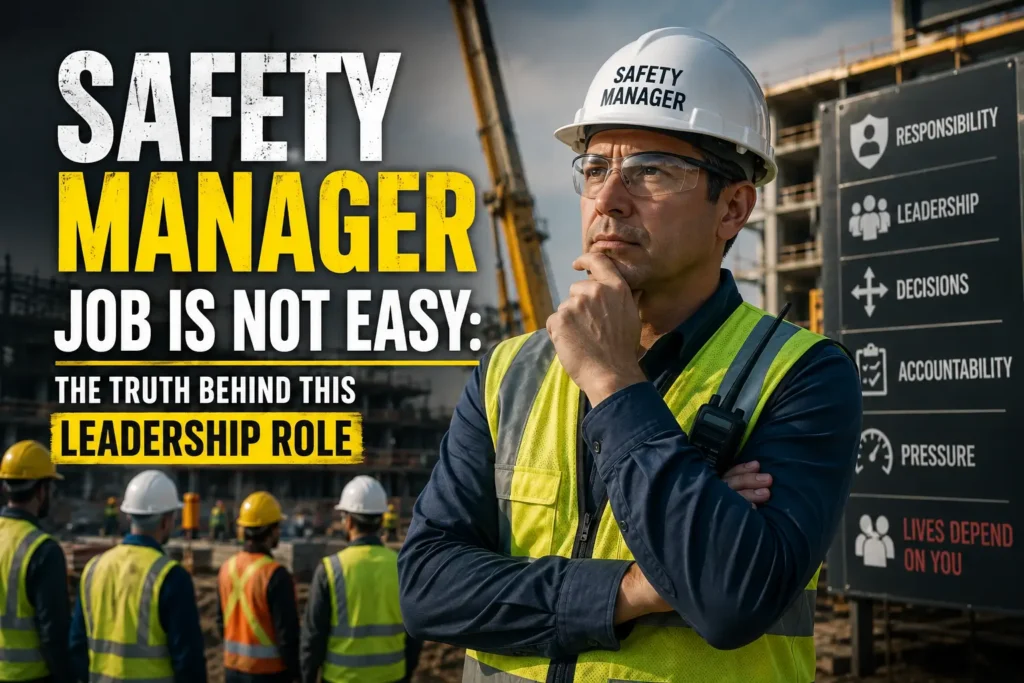
Safety Manager Job Is Not Easy: The Truth Behind This Leadership Role
When people hear the title Safety Manager, they often imagine someone who spends the day attending meetings, signing permits, and supervising Safety Officers.
From the outside, the job may look comfortable.
Many people believe the Safety Manager only needs to:
- review reports
- conduct meetings
- approve documents
- inspect the workplace occasionally
The reality is completely different.
A Safety Manager carries one of the biggest responsibilities on any construction project, refinery, manufacturing plant, or industrial facility.
Every important safety decision eventually reaches the Safety Manager.
This is why many experienced professionals say:
Safety Manager Job Is Not Easy.
The position requires technical knowledge, leadership, communication, decision-making, and the ability to protect hundreds or even thousands of workers every single day.
Let’s understand why this role is far more challenging than many people realize.
A Safety Manager Is Responsible for an Entire Safety System
Unlike a Safety Officer who may focus on a particular work area, a Safety Manager oversees the complete safety management system.
This includes:
- risk management
- inspections
- audits
- permits
- incident investigations
- emergency preparedness
- legal compliance
The Safety Manager ensures that every part of the organization works together to maintain a safe workplace.
It is a responsibility that affects every department and every worker.
Every Decision Can Affect Hundreds of Workers
One incorrect decision may have serious consequences.
For example:
- approving unsafe work
- ignoring a critical hazard
- delaying corrective actions
- overlooking safety procedures
can place many workers at risk.
Unlike many office jobs, decisions made by a Safety Manager can directly affect human lives.
That responsibility creates constant pressure.
Every decision must be based on sound judgment and professional experience.
Managing People Is More Difficult Than Managing Safety Rules
Safety procedures are usually straightforward.
Managing people is much harder.
A Safety Manager works with:
- Safety Officers
- engineers
- supervisors
- contractors
- project managers
- senior management
Each group has different priorities.
The Safety Manager must bring everyone together with one common objective:
Keeping people safe.
Strong leadership is just as important as technical knowledge.
The Pressure Comes From Every Direction
A Safety Manager often receives pressure from multiple sources.
For example:
- management wants productivity
- clients demand compliance
- contractors want flexibility
- workers want practical solutions
Balancing all these expectations is never easy.
Sometimes difficult decisions must be made.
The Safety Manager must protect workers even when those decisions delay work or increase costs.
Safety always comes first.
Accident Investigations Carry Huge Responsibility
When a serious incident occurs, everyone wants answers.
Questions immediately arise:
- What happened?
- Why did it happen?
- Could it have been prevented?
- Who was responsible?
The Safety Manager usually leads or supervises the investigation.
They must:
- collect evidence
- interview witnesses
- analyze root causes
- recommend corrective actions
The investigation must be fair, accurate, and based on facts rather than assumptions.
Legal Compliance Is a Daily Responsibility
Safety Managers must ensure the organization complies with:
- national safety laws
- client requirements
- company procedures
- international standards
Failure to comply may result in:
- penalties
- legal action
- project delays
- reputational damage
Keeping up with changing regulations requires continuous learning.
Compliance is not a one-time activity.
It is part of everyday work.
Emergency Situations Demand Immediate Leadership
Emergencies rarely happen at convenient times.
Examples include:
- fires
- confined space incidents
- crane accidents
- chemical spills
- medical emergencies
During these situations, everyone looks to the Safety Manager for leadership.
Quick decisions must be made while remaining calm under pressure.
Preparation before emergencies often determines how effectively they are managed.
Managing Safety Officers Is a Major Responsibility
Safety Managers do not work alone.
They lead teams of Safety Officers and HSE professionals.
Responsibilities include:
- assigning duties
- reviewing inspections
- mentoring junior staff
- solving technical problems
- improving team performance
A strong Safety Manager develops future safety leaders rather than simply managing daily tasks.
Leadership creates long-term success.
Safety Managers Spend More Time in Meetings Than Many People Expect
Meetings are an essential part of the role.
Typical meetings include:
- client meetings
- management reviews
- contractor coordination
- incident discussions
- audit reviews
- planning sessions
These meetings help coordinate safety across different departments.
Although they may not seem exciting, they are essential for maintaining effective safety management.
Documentation Is Extensive
Many people underestimate the amount of paperwork involved.
Safety Managers review:
- risk assessments
- method statements
- audit reports
- incident reports
- training records
- performance statistics
Accurate documentation supports legal compliance and demonstrates that safety is being properly managed.
Good recordkeeping protects both workers and organizations.
Building a Strong Safety Culture Takes Years
Changing workplace culture cannot be achieved overnight.
Safety Managers must encourage:
- worker participation
- hazard reporting
- safe behavior
- continuous improvement
Building trust takes time.
Workers are more likely to follow safety procedures when they believe management genuinely values their wellbeing.
Creating that culture is one of the greatest challenges in the profession.
Clients Expect High Standards
On major projects, clients closely monitor safety performance.
They may review:
- inspections
- audits
- incident statistics
- permit systems
- training programs
The Safety Manager must demonstrate that safety standards are consistently maintained.
Client confidence is earned through professional performance.
Poor safety management can affect future business opportunities.
Continuous Learning Never Ends
The safety profession continues evolving.
New technologies, regulations, and best practices appear regularly.
Successful Safety Managers continue learning through:
- professional certifications
- industry seminars
- technical training
- practical experience
Experience is valuable.
Continuous learning makes that experience even stronger.
Why This Job Is Mentally Demanding
The work does not end after leaving the site.
Many Safety Managers continue thinking about:
- unresolved hazards
- upcoming audits
- emergency planning
- project risks
The responsibility can be mentally demanding because protecting lives requires constant attention.
Maintaining focus every day is one of the biggest challenges of the profession.
The Rewards Make the Responsibility Worthwhile
Although the role is demanding, it is also highly rewarding.
A successful Safety Manager helps:
- prevent accidents
- improve workplace culture
- protect workers
- support business success
Seeing employees return home safely every day is one of the greatest achievements in the profession.
Very few careers offer such a meaningful impact on people’s lives.
Conclusion
The job of a Safety Manager is far more challenging than many people realize.
It requires balancing technical expertise, leadership, communication, legal compliance, and emergency preparedness while protecting workers across complex operations.
Every day brings new challenges, new risks, and new decisions.
Yet despite the pressure, Safety Managers play a vital role in creating workplaces where accidents are prevented and lives are protected.
For professionals who enjoy leadership, problem-solving, and making a real difference, becoming a Safety Manager is one of the most respected and rewarding careers in the HSE profession.
What Is the Difference Between a Safety Officer and an HSE Engineer?
FAQs
Is a Safety Manager job difficult?
Yes. The role involves significant responsibility for worker safety, legal compliance, leadership, and risk management.
What does a Safety Manager do every day?
A Safety Manager oversees safety programs, audits, inspections, incident investigations, training, permits, and regulatory compliance.
Why is the Safety Manager role stressful?
The role involves protecting workers while balancing operational demands, client expectations, and legal responsibilities.
What skills should a Safety Manager have?
Strong leadership, communication, technical knowledge, decision-making, and problem-solving skills are essential.
Is becoming a Safety Manager a good career?
Yes. It offers excellent career growth, leadership opportunities, competitive salaries, and the satisfaction of improving workplace safety.
