 Skip to content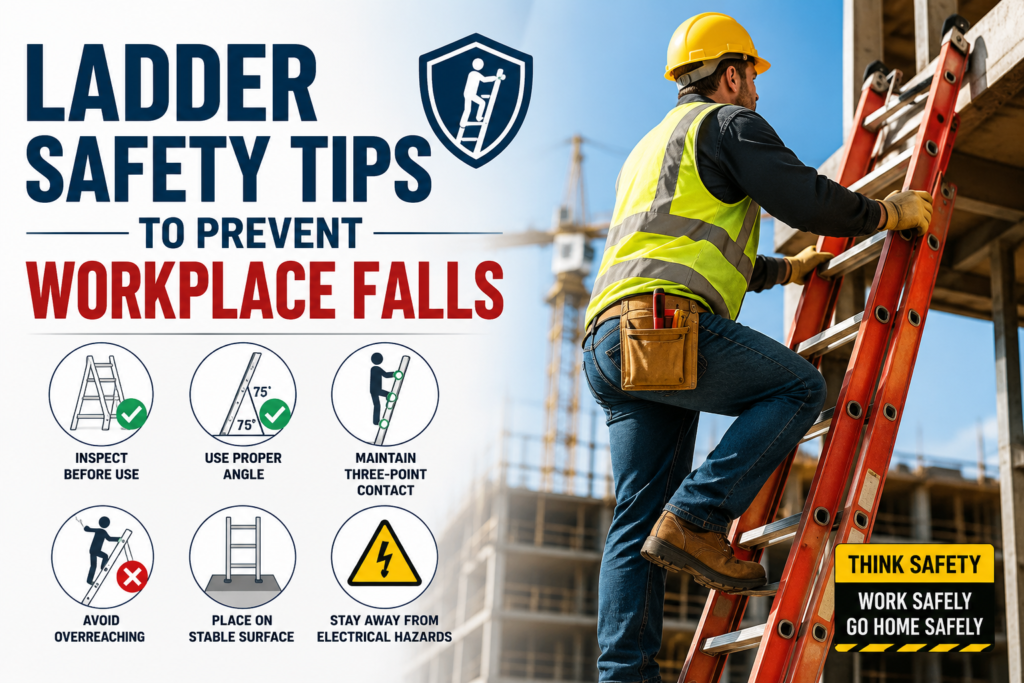
Ladder Safety Tips to Prevent Workplace Falls
Ladders are one of the most commonly used tools in workplaces across the world. Construction workers use them to access elevated areas, electricians rely on them for installations, warehouse employees use them for storage tasks, and maintenance teams depend on them for repairs and inspections. Because ladders are simple tools, many workers underestimate the dangers associated with them. Unfortunately, falls from ladders continue causing serious injuries and fatalities every year. That is why understanding proper ladder safety tips to prevent workplace falls is critical for every worker and employer.
Many ladder accidents happen during routine tasks that workers perform every day. A worker may climb a damaged ladder, overreach while working, or place the ladder on unstable ground. Within seconds, a simple task can turn into a life-changing accident. Falls from ladders may result in broken bones, spinal injuries, head trauma, or fatalities, even from relatively low heights.
According to OSHA and workplace safety statistics, falls remain one of the leading causes of workplace deaths in construction and maintenance industries. Ladder-related incidents contribute significantly to these numbers every year.
The dangerous part about ladder hazards is that workers often become too comfortable around them. Because ladders are used daily, people sometimes stop treating them with caution. Workers may rush tasks, skip inspections, or use ladders improperly to save time. Unfortunately, gravity does not forgive shortcuts.
Think of a ladder like a temporary bridge between the ground and an elevated work area. If the bridge is unstable, damaged, or used incorrectly, the risk of collapse or falling increases immediately. Proper ladder safety practices create stability, balance, and protection for workers performing elevated tasks.
The good news is that most ladder accidents are preventable. Proper inspections, safe climbing techniques, worker training, and correct ladder selection dramatically reduce fall risks in workplaces.
Understanding Ladder Safety
Ladder safety involves using ladders correctly to prevent falls, injuries, and workplace accidents. While ladders may appear simple, they create serious hazards when used improperly. A ladder accident can happen within seconds because workers often perform tasks while balancing, reaching, and working at height simultaneously.
Imagine trying to stand steadily on a narrow surface while holding tools and reaching outward. Even small shifts in body weight can affect balance quickly. Ladders require careful positioning and controlled movement to remain stable.
Many workplace falls happen because workers underestimate ladder risks. Unlike large scaffolding systems or elevated platforms, ladders feel familiar and easy to use. That familiarity often creates dangerous overconfidence.
Why Ladder Safety Is Important
Ladders expose workers to fall hazards, one of the leading causes of workplace fatalities. Falls can happen because of unstable surfaces, damaged ladders, improper climbing techniques, or loss of balance.
Ladder accidents may result in:
- Broken bones
- Head injuries
- Back injuries
- Spinal damage
- Fatal falls
Even short falls can cause severe injuries depending on landing surfaces and body position.
Good ladder safety protects workers while improving productivity and reducing downtime caused by accidents.
Common Causes of Ladder Accidents
Most ladder accidents happen because basic safety practices are ignored.
Common causes include:
- Using damaged ladders
- Improper ladder angle
- Slippery surfaces
- Overreaching
- Carrying heavy objects while climbing
- Standing on top steps
- Poor ladder selection
Rushing tasks also contributes heavily to ladder incidents.
Many workers know safety rules but take shortcuts during routine work. Unfortunately, simple mistakes often lead directly to serious injuries.
Types of Workplace Ladders
Different ladder types are designed for different tasks and environments.
Step Ladders
Step ladders are self-supporting ladders commonly used for indoor maintenance, electrical work, painting, and light-duty tasks.
These ladders should always remain fully opened with spreaders locked securely before use.
Workers should never lean step ladders against walls because they are not designed for that purpose.
Extension Ladders
Extension ladders are used for accessing higher elevations such as rooftops or tall structures.
These ladders require proper angle placement and secure positioning to prevent slipping.
Extension ladders should extend at least 3 feet above landing surfaces for safe access.
Platform and Specialty Ladders
Some workplaces use platform ladders, fiberglass ladders, rolling ladders, or specialty ladders designed for specific tasks.
Fiberglass ladders are especially important near electrical work because they do not conduct electricity like metal ladders.
Choosing the correct ladder type improves both safety and efficiency.
Common Ladder Hazards
Understanding ladder hazards helps workers recognize dangerous situations before accidents happen.
Falls from Height
Falls are the most serious ladder hazard. Workers may lose balance, slip, or fall because of unstable ladders or unsafe climbing practices.
Even experienced workers are vulnerable if conditions change suddenly.
Fall prevention starts with proper ladder setup and controlled movement.
Slipping and Ladder Movement
Ladders may slip because of wet surfaces, loose flooring, uneven ground, or improper angle placement.
A ladder that shifts unexpectedly can throw workers off balance instantly.
Stable footing is one of the most important ladder safety requirements.
Electrical Hazards
Metal ladders create electrocution risks near power lines or electrical systems.
Workers sometimes forget how easily ladders can contact energized equipment.
Electricity can travel through conductive ladders quickly, causing severe burns or fatalities.
Fiberglass ladders provide safer alternatives for electrical work.
Overreaching and Loss of Balance
Overreaching occurs when workers lean too far sideways while working on ladders.
This shifts body weight beyond the ladder’s center of balance and increases tipping risks.
Workers should always reposition ladders instead of stretching excessively.
Damaged Ladder Components
Broken rungs, loose hinges, bent rails, or missing feet weaken ladder stability significantly.
Damaged ladders should never remain in service.
Small defects often become major failures under worker weight.
OSHA Ladder Safety Requirements
OSHA establishes ladder safety standards to reduce fall-related injuries and fatalities in workplaces.
OSHA Ladder Standards
OSHA requires ladders to:
- Support intended loads
- Remain inspected regularly
- Be free from defects
- Be used according to manufacturer instructions
Unsafe ladders must be removed from service immediately.
Employer Responsibilities
Employers are responsible for providing:
| Employer Responsibility | Purpose |
|---|---|
| Safe ladders | Prevent structural failures |
| Worker training | Improve hazard awareness |
| Ladder inspections | Identify unsafe conditions |
| Fall protection systems | Reduce injury risks |
| Proper storage | Prevent ladder damage |
Strong ladder safety programs help reduce workplace accidents significantly.
Essential Ladder Safety Tips
Following proper ladder safety practices greatly reduces fall risks.
Inspect Ladders Before Use
Workers should inspect ladders before every use.
Check for:
- Cracks
- Loose parts
- Damaged rungs
- Missing feet
- Bent rails
- Oil or grease contamination
Damaged ladders should be tagged and removed from service immediately.
Choose the Right Ladder
Using the wrong ladder creates unnecessary hazards.
Workers should select ladders based on:
- Height requirements
- Load capacity
- Work environment
- Electrical exposure risks
A ladder that is too short encourages unsafe climbing positions.
Place Ladders on Stable Surfaces
Ladders should always remain on firm, level surfaces.
Workers should avoid placing ladders on:
- Mud
- Loose gravel
- Slippery floors
- Unstable objects
Stable footing improves balance and reduces movement.
Maintain Three-Point Contact
Workers should maintain three-point contact while climbing.
This means keeping:
- Two hands and one foot, or
- Two feet and one hand
in contact with the ladder at all times.
Three-point contact improves climbing stability significantly.
Do Not Overreach While Working
Workers should keep their body centered between ladder rails.
Overreaching shifts weight dangerously and increases fall risks.
It is always safer to climb down and reposition the ladder properly.
Secure Extension Ladders Properly
Extension ladders should be secured at the top whenever possible.
The correct ladder angle follows the 4-to-1 rule:
- For every 4 feet of ladder height,
- Place the base 1 foot away from the wall.
Proper angle placement improves ladder stability greatly.
Keep Ladders Away from Electrical Hazards
Workers should maintain safe distances from overhead power lines and energized equipment.
Metal ladders should never be used near electrical hazards.
Electricity and ladders create deadly combinations when precautions are ignored.
Avoid Carrying Heavy Loads While Climbing
Heavy objects reduce balance and increase fall risks while climbing.
Workers should use tool belts, hoists, or rope systems to move materials safely.
Free hands improve climbing control.
Wear Proper Footwear
Slip-resistant footwear improves grip while climbing ladders.
Workers should avoid climbing ladders with muddy, oily, or damaged shoes.
Good footwear improves stability significantly.
Follow Ladder Load Limits
Every ladder has a maximum load rating.
Workers should consider:
- Body weight
- Tools
- Equipment
- Materials carried
Overloading weakens ladder stability and increases structural failure risks.
Best Practices for Workplace Ladder Safety
Strong ladder safety programs combine inspections, training, supervision, and worker awareness.
Worker Training and Awareness
Workers should understand:
- Ladder selection
- Safe climbing techniques
- Inspection procedures
- Hazard recognition
- Electrical safety
Training improves safe behavior and reduces accidents significantly.
Knowledge is one of the strongest forms of fall prevention.
Ladder Storage and Maintenance
Proper ladder storage prevents damage caused by weather, moisture, impacts, or improper stacking.
Regular maintenance keeps ladders in safe working condition.
Well-maintained ladders operate more safely and last longer.
Common Ladder Safety Mistakes
Many ladder accidents happen because workers repeat unsafe habits routinely.
Standing on the Top Step
Workers sometimes stand on top steps to gain extra height.
This greatly reduces balance and increases fall risks.
Manufacturers clearly warn against standing on top ladder sections.
Using Damaged Ladders
Some workers continue using damaged ladders because “the defect looks small.”
Unfortunately, small cracks or loose parts can fail suddenly under weight.
Unsafe ladders should never remain in use.
Conclusion
Ladder safety is one of the most important parts of workplace fall prevention because ladders are used daily across nearly every industry. Falls from ladders can cause severe injuries or fatalities within seconds, often during simple routine tasks.
Most ladder accidents are preventable when workers follow proper safety practices such as inspecting ladders, maintaining three-point contact, using correct ladder types, avoiding overreaching, and placing ladders on stable surfaces.
Ladders may seem simple, but they require respect and careful use. A safe ladder setup provides stability and confidence for workers performing elevated tasks.
Every properly inspected ladder, every safe climb, and every fall prevented represents safer workers and stronger workplace safety culture. That is the true purpose of ladder safety.
Toolbox Talk Topics for Construction Workers
How to Conduct an Effective Safety Meeting
Toolbox Talk Topics That Prevent Serious Accidents
OSHA Monthly Safety Topics 2026
Chemical Handling and Storage Toolbox Talk
FAQs
1. What is the most common ladder accident?
Falls caused by improper ladder use, overreaching, or unstable ladder placement are the most common ladder accidents.
2. Why is three-point contact important on ladders?
Three-point contact improves balance and stability while climbing or descending ladders.
3. Can metal ladders be used near electrical systems?
Metal ladders should never be used near electrical hazards because they conduct electricity.
4. What should workers inspect before using a ladder?
Workers should inspect ladder rails, rungs, feet, hinges, and overall condition for defects or damage.
5. What is the correct angle for extension ladders?
The recommended angle follows the 4-to-1 rule, where the base is placed 1 foot away for every 4 feet of ladder height.
