 Skip to content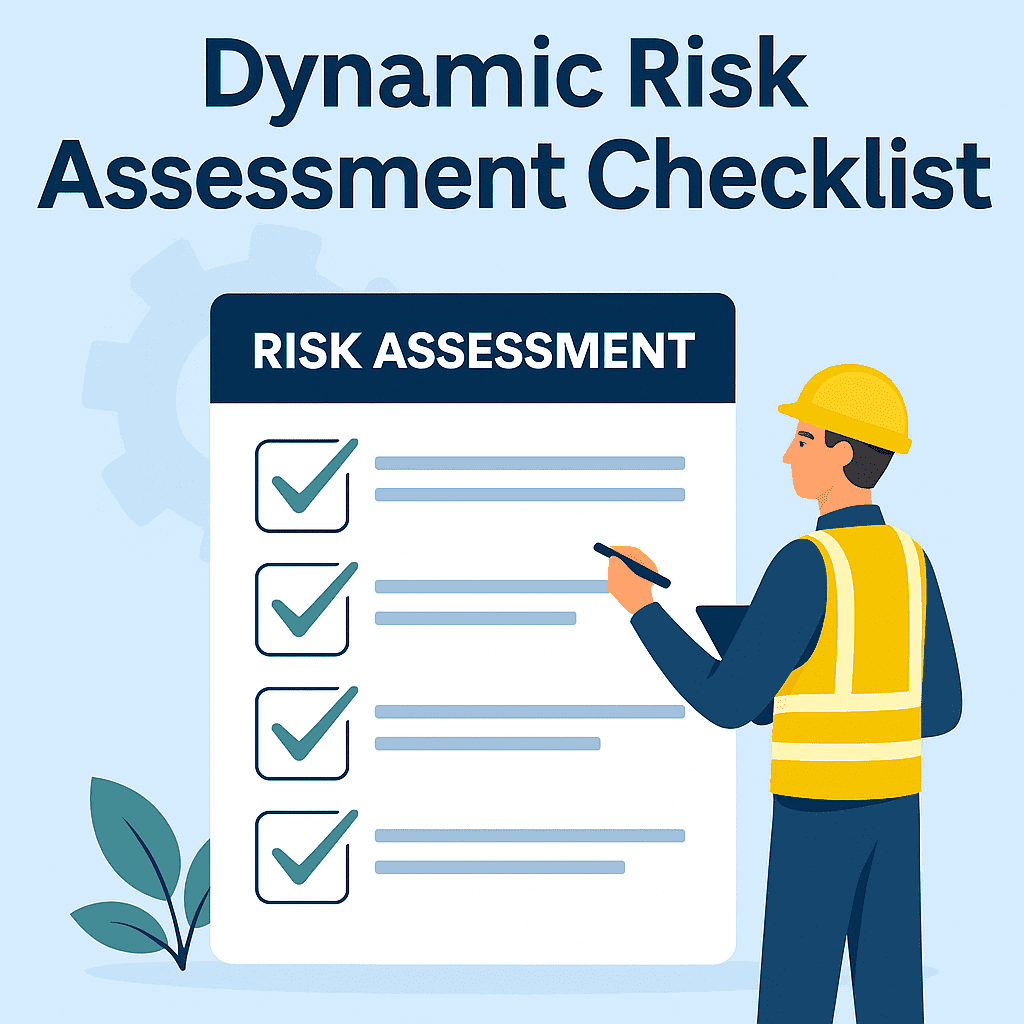
How to Conduct a Dynamic Risk Assessment in Real-Time Work Environments
✅ Introduction
In fast-changing workplaces like construction sites, oil rigs, manufacturing plants, and emergency response zones, risks can shift within moments. That’s why a Dynamic Risk Assessment (DRA) is essential. Unlike formal or scheduled risk assessments, dynamic risk assessments are performed in real-time—on the spot—to evaluate new hazards and take immediate control actions.
This guide explains how to conduct a dynamic risk assessment, with practical examples, a step-by-step approach, and a free downloadable checklist.
📌 What is a Dynamic Risk Assessment?
A Dynamic Risk Assessment is a continuous process of identifying, analyzing, and controlling risks in real-time situations. It is particularly useful when:
- Conditions change quickly
- Unexpected hazards appear
- Immediate decisions must be made without a formal written risk assessment
It enables frontline workers, supervisors, and safety officers to adapt their behavior and controls as the environment evolves.
🛠️ When is a Dynamic Risk Assessment Required?
You should perform a DRA when:
- Weather conditions change suddenly
- New equipment is introduced mid-task
- A subcontractor enters a restricted zone
- You’re responding to an accident or emergency
- Work scope changes unexpectedly
- A hazard not previously identified is discovered
Example: While operating a mobile elevated work platform (MEWP), you notice overhead cables that weren’t in the initial plan. This requires a dynamic risk reassessment before proceeding.
🔍 Step-by-Step Guide to Conducting a Dynamic Risk Assessment
1. STOP and Observe
Take a moment to pause. Look around the area for any new hazards. Use the “S.T.A.R.” method:
- Stop
- Think
- Assess
- Respond
2. Identify Hazards
Look for:
- Physical hazards (sharp objects, machinery)
- Environmental changes (wind, rain, fog)
- Human factors (fatigue, new workers)
- Equipment malfunctions
3. Assess the Risk
Determine the likelihood and severity of harm:
- Can it cause injury or fatality?
- How soon can it happen?
- Who could be affected?
Use a simple risk matrix if possible.
4. Decide on Control Measures
Apply the Hierarchy of Controls:
- Eliminate the hazard
- Substitute with safer methods
- Implement engineering controls
- Use administrative controls
- Use PPE
5. Take Action
Immediately apply the necessary controls. Communicate the change to your team or stop work if necessary.
6. Review and Monitor
Continue to observe the situation. Hazards can evolve further, so repeat the assessment if new risks appear.
📋 Dynamic Risk Assessment Checklist (Short)
Here’s a simplified checklist:
| Step | Task | Yes/No | Comments |
|---|---|---|---|
| 1 | Stopped and observed surroundings? | ✅ | |
| 2 | Identified new/unexpected hazards? | ✅ | |
| 3 | Assessed level of risk? | ✅ | |
| 4 | Applied control measures? | ✅ | |
| 5 | Communicated with team? | ✅ | |
| 6 | Continued monitoring the environment? | ✅ |
✅ Dynamic Risk Assessment Checklist Template
| Step | Checklist Item | Details / Response |
|---|---|---|
| 1 | Date & Time of Assessment | [Insert date & time] |
| 2 | Location of Work | [Describe specific location] |
| 3 | Task Being Undertaken | [Brief description of the task or activity] |
| 4 | Assessor Name & Position | [Name and job role of assessor] |
| 5 | Team Members Involved | [List names or number of workers] |
| 6 | Initial Observations | [What do you see? Any obvious hazards?] |
| 7 | Have Conditions Changed Since the Last Risk Assessment? | ☐ Yes ☐ No If yes, describe: |
| 8 | Are New Hazards Present? | ☐ Yes ☐ No If yes, list them: |
| 9 | Hazard Identification | List any identified hazards (e.g., slip, trip, equipment failure): |
| 10 | Potential Consequences | Describe what could happen if the hazard is not controlled: |
| 11 | Likelihood of Occurrence | ☐ Rare ☐ Unlikely ☐ Possible ☐ Likely ☐ Almost Certain |
| 12 | Severity of Outcome | ☐ Minor ☐ Moderate ☐ Serious ☐ Major ☐ Fatal |
| 13 | Step 4: Risk Rating (Optional) | Use a 5×5 matrix or score system (e.g., Risk = Likelihood × Severity) |
| 14 | Control Measures Implemented Immediately | What actions are being taken now to reduce the risk? |
| 15 | Further Action Required? | ☐ Yes ☐ No If yes, describe actions: |
| 16 | Can the Task Continue Safely? | ☐ Yes ☐ No ☐ Proceed with caution |
| 17 | Emergency Contacts on Site | [Insert name & phone numbers] |
| 18 | Remarks / Notes | [Any other observations or important info] |
| 19 | Assessor Signature & Date | [Sign and date here] |
| 20 | Supervisor Review (if required) | [Supervisor’s name and sign] |
📌 How to Use This Checklist:
- Before starting a task, especially in dynamic or changing environments (construction, shutdown work, confined spaces, etc.).
- Reassess whenever conditions change, such as weather, workforce, or tools.
- This checklist supports real-time hazard control — ideal for frontline supervisors and team leads.
⚠️ Common Mistakes to Avoid
- Relying only on formal assessments
- Ignoring gut feelings or obvious red flags
- Failing to communicate hazards with the team
- Skipping reassessment after new developments
- Not stopping work when unsure
🧠 Real-World Example
A scaffolding crew is working at height when high winds suddenly pick up. The supervisor notices tarps flapping dangerously. A quick dynamic risk assessment is done, work is paused, and the crew removes the tarps and installs wind bracing before resuming.
🎯 Benefits of Dynamic Risk Assessment
- Promotes situational awareness
- Empowers employees to take responsibility for safety
- Reduces incidents from unexpected changes
- Supports compliance with OSHA and HSE standards
- Encourages a proactive safety culture
🔗 Related Internal Links
- Step-by-Step Guide to Conducting a Job Safety Analysis (JSA) in the Workplace
- Electrical Safety Inspection Checklist | Free Downloadable Template
- Monthly Office Safety Inspection Checklist | Free Download Template
- Daily Construction Site Safety Checklist | Free Template
- Free Incident Report Template for Workplace Accidents
🌐 Recommended External Link
🙋♂️ Frequently Asked Questions (FAQs)
Q1. Who should perform a dynamic risk assessment?
Anyone on the job site—particularly supervisors, safety officers, or frontline workers noticing a new hazard.
Q2. Is a DRA legally required?
While not always mandatory, it supports compliance with general duty clauses in OSHA and HSE regulations.
Q3. Should I document a dynamic risk assessment?
Yes, especially if it leads to a change in work procedure or control measures.
Q4. Can DRAs be used in office environments?
Absolutely. Situations like fire drills, sudden spills, or equipment failures can warrant a quick assessment.
Q5. What tools are helpful for DRA?
Visual inspections, communication tools (walkie-talkies, apps), and portable checklists help streamline the process.
✅ Conclusion
A Dynamic Risk Assessment is a vital tool in every safety professional’s toolbox. When used effectively, it can prevent incidents, empower employees, and ensure that safety evolves as quickly as the job does.
Start implementing DRA today and reinforce your proactive safety culture with confidence.
