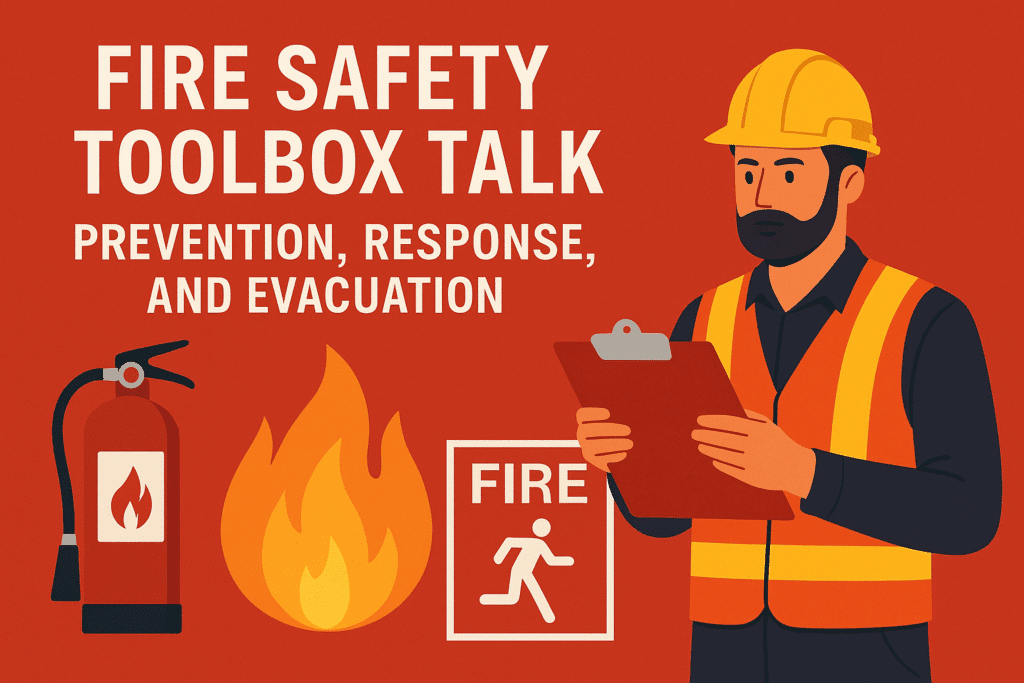
Fire Safety Toolbox Talk – Prevention, Response, and Evacuation
1. Introduction
Fire incidents are among the most dangerous emergencies in any workplace. They can cause severe injuries, fatalities, and significant damage to property. A well-structured Fire Safety Toolbox Talk equips employees with the knowledge and skills needed to prevent fires, respond effectively during an incident, and evacuate safely.
In this session, we will cover:
- Identifying fire hazards
- Implementing fire prevention measures
- Responding to fire emergencies
- Evacuation procedures and responsibilities
2. Understanding Fire Risks in the Workplace
Fires can occur in any environment, but certain workplaces—such as manufacturing plants, warehouses, construction sites, and offices—have unique risk factors.
Common Fire Hazards
- Faulty electrical wiring or overloaded circuits
- Improper storage of flammable materials
- Hot work activities (welding, cutting, grinding) without proper permits
- Smoking in non-designated areas
- Poor housekeeping leading to accumulation of combustible waste
The Fire Triangle
A fire needs three elements to ignite:
- Heat – from equipment, friction, or open flames
- Fuel – paper, wood, chemicals, fuel, plastics
- Oxygen – from the surrounding air
Prevention tip: Removing any one of these elements can prevent fire ignition.
3. Fire Prevention Measures
Proactive fire prevention is the most effective way to safeguard your workplace.
3.1 Electrical Safety
- Regular inspection of wiring and equipment
- Avoid using damaged cords or overloaded power strips
- Ensure equipment is switched off when not in use
3.2 Flammable Material Storage
- Store fuels, solvents, and chemicals in designated flammable storage cabinets
- Maintain Material Safety Data Sheets (MSDS) for all chemicals
- Keep flammable materials away from ignition sources
3.3 Hot Work Safety
- Follow the Hot Work Permit System
- Use fire-resistant blankets or shields when welding or grinding
- Maintain a fire watch for at least 30 minutes after hot work
3.4 Housekeeping Practices
- Dispose of combustible waste promptly
- Keep aisles, exits, and fire extinguishers clear
- Avoid clutter near heat-producing equipment
4. Fire Response Procedures
If a fire occurs, quick and correct action can save lives and property.
4.1 Raising the Alarm
- Activate the nearest fire alarm pull station
- Call the emergency number (e.g., 101/911)
- Clearly state your location and nature of the fire
4.2 Using a Fire Extinguisher
Follow the PASS method:
- P – Pull the pin
- A – Aim at the base of the fire
- S – Squeeze the handle
- S – Sweep side to side
Important: Only attempt to extinguish small, contained fires if trained and safe to do so.
4.3 Evacuation
- Stop work immediately and head to the nearest exit
- Do not use elevators during a fire
- Proceed to the designated assembly point
5. Evacuation Planning and Drills
A well-organized evacuation plan ensures everyone knows what to do.
5.1 Components of an Evacuation Plan
- Clearly marked escape routes and exits
- Designated assembly points outside danger zones
- Assigned fire wardens to guide and check personnel
5.2 Fire Drills
- Conduct at least two fire drills annually
- Record and review drill performance
- Identify and address any issues
6. Worker Roles and Responsibilities
During a fire emergency:
- All employees must follow evacuation procedures
- Fire wardens ensure all areas are clear and assist people with disabilities
- Supervisors account for team members at the assembly point
- Security personnel may assist emergency services with site access
7. Fire Safety Equipment Overview
- Fire Extinguishers: For small fires; types include water, foam, CO₂, and dry powder
- Fire Blankets: For small kitchen or fabric fires
- Smoke Detectors: Early warning devices
- Sprinkler Systems: Automatic fire suppression
Maintenance: Equipment should be inspected monthly and serviced annually.
8. Delivering a Fire Safety Toolbox Talk
When presenting this session:
- Keep it interactive – ask employees to share experiences
- Use real-life examples from the workplace
- Demonstrate the use of a fire extinguisher
- Conduct a walk-through of escape routes
9. Summary & Key Takeaways
- Identify and control fire hazards before they become threats
- Know your workplace fire prevention policies
- Act quickly and correctly in case of fire
- Participate actively in fire drills and toolbox talks
Internal Links:
- Heat Stress Prevention Toolbox Talk
- Emergency Evacuation Procedures – Step-by-Step Workplace Guide
- Lockout and Tagout – LOTO Safety Procedure
- How to Perform a Fire Risk Assessment in the Workplace – Step-by-Step Guide
- How to Conduct a Dynamic Risk Assessment in Real-Time Work Environments
External Links:
