 Skip to content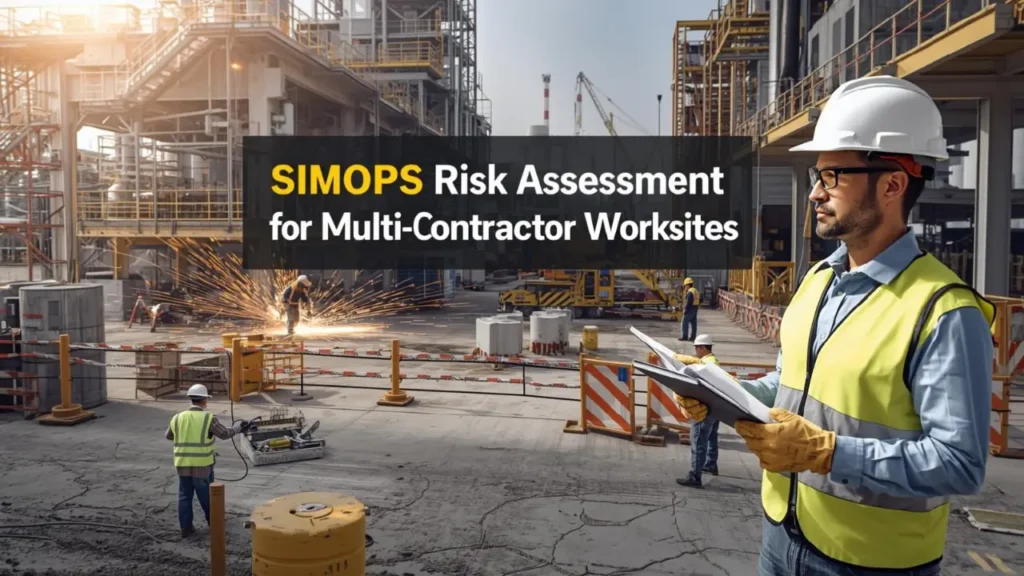
SIMOPS Risk Assessment for Multi-Contractor Worksites
Modern industrial projects rarely involve a single activity or a single contractor. Construction, oil and gas, power plants, manufacturing shutdowns, and infrastructure projects often require multiple activities to be carried out at the same time by different contractors in the same area. These situations are known as SIMOPS—Simultaneous Operations.
While SIMOPS help projects meet tight schedules, they significantly increase safety risks if not properly planned and controlled. This is why SIMOPS risk assessment for multi-contractor worksites is a critical safety process. This article explains what SIMOPS risk assessment is, why it is essential, how it is conducted, and how safety professionals can manage complex interaction risks effectively.
What Is SIMOPS?
SIMOPS stands for Simultaneous Operations. It refers to situations where two or more activities are performed at the same time in the same or adjacent work areas, creating the potential for interaction hazards.
Examples of SIMOPS include:
- Hot work taking place near confined space entry
- Lifting operations above ongoing maintenance work
- Electrical work performed alongside mechanical activities
- Construction activities occurring near operational plant equipment
- Multiple contractors working in overlapping zones
Individually, each task may be controlled and relatively safe. However, when combined, the interaction between activities can create new and unexpected risks.
What Is SIMOPS Risk Assessment?
A SIMOPS risk assessment is a structured process used to identify, evaluate, and control risks arising from simultaneous activities, particularly when multiple contractors are involved.
Unlike standard risk assessments that focus on individual tasks, SIMOPS risk assessment focuses on:
- Interaction between activities
- Shared workspaces and access routes
- Conflicting hazards and controls
- Communication and coordination failures
Its primary objective is to prevent one activity from creating hazards for another.
Why SIMOPS Are High Risk at Multi-Contractor Worksites
Multi-contractor worksites are especially vulnerable to SIMOPS-related incidents due to several factors.
Increased Interaction Hazards
When activities overlap, hazards from one operation can directly affect another. For example, sparks from hot work can ignite flammable vapors released during maintenance work nearby.
Lack of Coordination
Different contractors may follow their own procedures, schedules, and safety standards. Without strong coordination, gaps and conflicts arise.
Communication Barriers
Language differences, unclear responsibilities, and poor information flow increase the likelihood of misunderstandings.
Congested Work Areas
Shared access routes, limited space, and overlapping work zones increase the risk of collisions, dropped objects, and unauthorized entry.
Conflicting Control Measures
Controls suitable for one activity may interfere with another. For example, barricades for one job may block emergency access for another.
Importance of SIMOPS Risk Assessment
SIMOPS risk assessment is essential for preventing serious incidents at complex worksites.
Prevention of Major Accidents
Many high-profile industrial accidents have occurred due to poorly managed simultaneous operations.
Improved Planning and Scheduling
Risk assessment helps identify incompatible activities and adjust work sequences to reduce risk.
Enhanced Contractor Coordination
It ensures all contractors understand how their activities affect others.
Regulatory and Client Compliance
Many clients and regulators require documented SIMOPS risk assessments for high-risk projects.
Protection of People, Assets, and Environment
Effective SIMOPS management reduces injuries, property damage, and environmental incidents.
Difference Between Task Risk Assessment and SIMOPS Risk Assessment
Understanding this difference is critical.
| Aspect | Task Risk Assessment | SIMOPS Risk Assessment |
|---|---|---|
| Focus | Individual task | Interaction between tasks |
| Scope | Single activity | Multiple activities |
| Contractors | Often one | Multiple |
| Risk Type | Direct hazards | Interaction hazards |
| Timing | Before task | Before and during simultaneous work |
Both assessments are required and complement each other.
When Is SIMOPS Risk Assessment Required?
SIMOPS risk assessment is required when:
- Multiple contractors work in the same area
- High-risk activities overlap
- Work is performed near live operations
- Shutdowns or turnarounds are in progress
- Construction and operations occur simultaneously
- Temporary and permanent works overlap
In many industries, SIMOPS risk assessment is mandatory for critical phases of work.
Common SIMOPS Scenarios at Industrial Worksites
Typical SIMOPS scenarios include:
- Hot work near fuel lines or chemical storage
- Crane lifting over occupied work areas
- Confined space entry during plant operation
- Electrical work near mechanical maintenance
- Excavation near underground services while traffic continues
- Commissioning activities alongside construction work
Each scenario introduces unique interaction hazards.
Key Elements of a SIMOPS Risk Assessment
An effective SIMOPS risk assessment includes several essential components.
Identification of Simultaneous Activities
All activities planned to occur at the same time must be identified, including routine and non-routine tasks.
Mapping of Work Areas
Understanding physical proximity and shared zones is critical. This includes access routes, escape paths, and emergency equipment locations.
Identification of Interaction Hazards
Interaction hazards arise when one activity affects another. Examples include:
- Fire, explosion, or toxic exposure
- Dropped objects
- Vehicle movement conflicts
- Noise and visibility issues
- Restricted emergency access
Risk Evaluation
Each interaction hazard is evaluated based on likelihood and severity, considering worst-case scenarios.
Control Measures
Controls are selected to eliminate or reduce interaction risks, not just task-specific hazards.
Coordination and Communication Plan
Clear communication channels and responsibilities are defined to manage simultaneous activities.
Step-by-Step Process for SIMOPS Risk Assessment
Step 1: Identify All Planned Activities
Compile a list of all activities scheduled for the same time period, including contractor work.
Step 2: Identify Contractors and Responsibilities
Clarify who is responsible for each activity and who has overall coordination authority.
Step 3: Analyze Interaction Hazards
Assess how each activity could impact others. Ask questions such as:
- Can one activity create hazards for another?
- Are control measures compatible?
- Are emergency arrangements shared?
Step 4: Evaluate Risks
Evaluate the likelihood and severity of interaction hazards using a risk rating system.
Step 5: Define SIMOPS Control Measures
Controls may include:
- Rescheduling activities
- Physical separation or zoning
- Permit-to-work restrictions
- Dedicated supervisors
- Temporary barriers and signage
- Enhanced communication protocols
Step 6: Communicate and Authorize
All contractors must be informed of SIMOPS arrangements. Work should only proceed after approval.
Step 7: Monitor and Review
SIMOPS risk assessment is dynamic. Conditions must be monitored continuously, and work stopped if risks increase.
Examples of SIMOPS Risk Assessment
Example 1: Hot Work and Confined Space Entry
- Interaction Hazard: Fire or explosion
- Risk: Fatal injury
- Controls: Separate work zones, reschedule activities, gas testing, permits
Example 2: Lifting Operations Over Maintenance Work
- Interaction Hazard: Dropped objects
- Risk: Serious injury or fatality
- Controls: Exclusion zones, lifting plans, coordination meetings
Example 3: Construction Near Live Plant
- Interaction Hazard: Contact with live equipment
- Risk: Major accident
- Controls: Physical isolation, access control, supervision
Roles and Responsibilities in SIMOPS Risk Assessment
Client or Principal Contractor
- Overall coordination
- Approval of SIMOPS arrangements
- Enforcement of safety standards
Safety Officers
- Facilitate SIMOPS risk assessment
- Identify interaction hazards
- Verify controls
- Monitor compliance
Supervisors
- Implement controls at site level
- Coordinate daily activities
- Stop work if unsafe conditions arise
Contractors
- Follow SIMOPS controls
- Communicate changes
- Participate in coordination meetings
Clear roles prevent confusion and conflict.
Common Mistakes in SIMOPS Risk Assessment
Treating SIMOPS Like Normal Work
Failing to recognize interaction risks is a major cause of incidents.
Poor Communication Between Contractors
Lack of coordination leads to conflicting activities and unsafe conditions.
Inadequate Supervision
SIMOPS require stronger supervision, not less.
Failure to Update Assessments
Changes in schedule or scope must trigger a review.
Best Practices for Effective SIMOPS Risk Assessment
To improve SIMOPS safety:
- Appoint a SIMOPS coordinator
- Conduct daily coordination meetings
- Use clear zoning and color-coded permits
- Restrict incompatible activities
- Train supervisors in SIMOPS management
- Encourage stop-work authority
Proactive planning saves lives.
To help you implement SIMOPS risk assessment effectively, download an editable SIMOPS risk assessment checklist and control templates.
Integration with Permit-to-Work System
SIMOPS risk assessment is closely linked with permits such as:
- Hot work permits
- Confined space permits
- Electrical permits
- Lifting permits
Permits should clearly reference SIMOPS conditions and restrictions.
Legal and Compliance Importance
Many safety regulations require employers to manage risks arising from simultaneous activities, especially in high-hazard industries. SIMOPS risk assessments provide evidence of:
- Hazard identification
- Risk evaluation
- Coordination and control
They are critical during audits and incident investigations.
Conclusion
SIMOPS significantly increase the complexity and risk of industrial projects, especially at multi-contractor worksites. Individual task risk assessments are not enough to manage these risks. SIMOPS risk assessment focuses on interaction hazards, coordination, and communication—key factors in preventing serious incidents. When implemented effectively, SIMOPS risk assessment protects workers, supports contractors, and ensures safe project execution without compromising productivity.
Non-Routine Job Risk Assessment Explained
Site-Specific Risk Assessment: Why One Size Does Not Fit All
Pre-Job Risk Assessment for High-Risk Activities
Risk Rating Systems Explained for Industrial Projects
Hazard Identification Methods Used by Safety Officers
Frequently Asked Questions (FAQs)
What does SIMOPS mean in safety management?
SIMOPS refers to simultaneous operations where multiple activities occur at the same time, creating interaction risks.
Why are SIMOPS dangerous?
Because hazards from one activity can directly impact another, increasing the likelihood of major accidents.
Who is responsible for SIMOPS risk assessment?
The principal contractor or client usually has overall responsibility, supported by safety officers and supervisors.
Is SIMOPS risk assessment mandatory?
In many industries and projects, it is mandatory for high-risk or complex operations.
How often should SIMOPS risk assessment be reviewed?
It should be reviewed whenever activities, schedules, or site conditions change.
