 Skip to content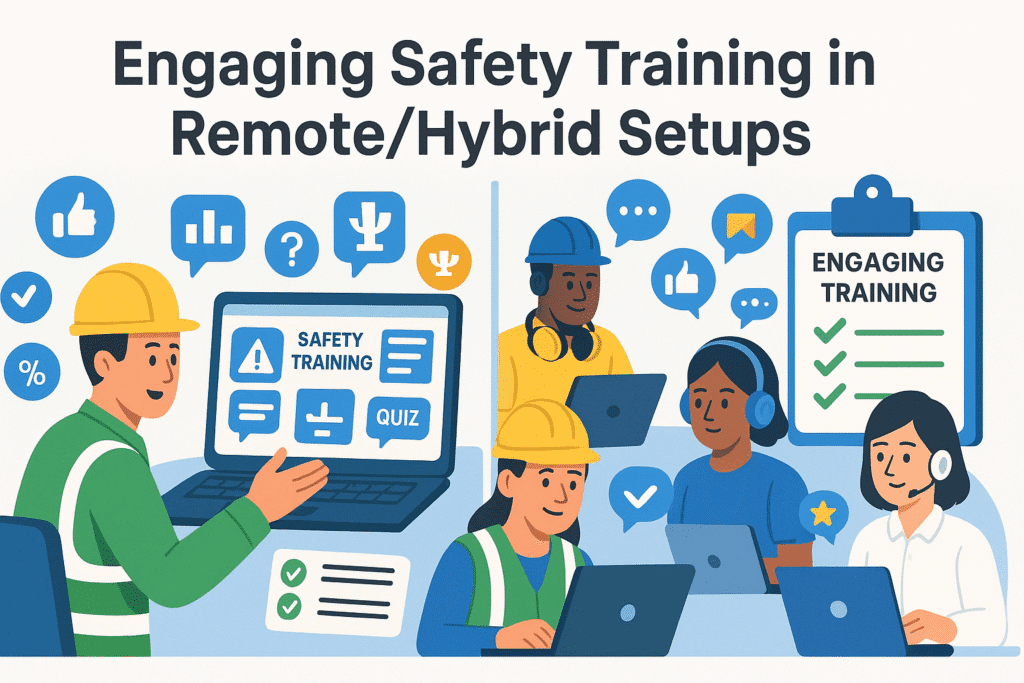
How to Keep Safety Training Engaging in Remote or Hybrid Setups
With more organizations adopting remote and hybrid work models, delivering effective safety training has become more challenging. Traditional in-person sessions rely on hands-on demonstrations and face-to-face interaction. In a virtual environment, attention spans are shorter and distractions higher. This article explores how to keep safety training engaging in remote or hybrid setups, ensuring your workforce stays informed, motivated, and compliant.
Challenges of Remote or Hybrid Safety Training
- Reduced attention spans: Online fatigue leads to lower retention.
- Lack of hands-on practice: Demonstrations are harder to replicate virtually.
- Technology barriers: Limited access to stable internet or devices.
- Lower participation: Employees may multitask or skip sessions without accountability.
Recognizing these challenges is the first step to designing engaging and effective remote training programs.
Strategies to Keep Safety Training Engaging
1. Break Training into Micro-Learning Modules
- Deliver short, focused lessons (5–15 minutes) rather than hour-long webinars.
- Focus each module on one key safety topic or procedure.
- Use a series format to build knowledge gradually.
2. Use Interactive Elements
- Include polls, quizzes, and breakout discussions to maintain engagement.
- Encourage participants to share their own safety experiences.
- Use gamification—points, badges, leaderboards—to make learning fun.
3. Incorporate Visuals and Demonstrations
- Use high-quality videos, animations, and infographics instead of text-heavy slides.
- Pre-record demonstrations of equipment or procedures from actual work sites.
- Provide downloadable checklists or quick-reference guides for later use.
4. Encourage Two-Way Communication
- Enable chat and Q&A functions during live sessions.
- Ask open-ended questions to stimulate discussion.
- Assign “safety champions” to lead parts of the session or moderate chat.
5. Blend Synchronous and Asynchronous Training
- Offer live virtual sessions for real-time interaction.
- Provide recordings and self-paced modules for those who can’t attend.
- Combine online learning with on-site practical exercises for hybrid workers.
6. Make It Role- and Task-Specific
- Tailor content to employees’ actual jobs and hazards.
- Use real-life scenarios, case studies, or incident videos from your industry.
- Allow workers to choose elective modules relevant to their tasks.
7. Provide Hands-On Practice Where Possible
- Send practice kits or PPE samples to remote workers if feasible.
- Ask hybrid workers to record themselves performing tasks and submit for feedback.
- Schedule in-person skill assessments when possible.
8. Track Participation and Provide Feedback
- Use learning management systems (LMS) to monitor attendance, completion, and quiz scores.
- Recognize high performers or departments.
- Follow up with short surveys to improve future sessions.
9. Schedule Regular Refreshers
- Revisit key topics every few months in micro-sessions.
- Tie training to seasonal hazards or new regulations.
- Use toolbox talk-style virtual meetings for quick refreshers.
Tools for Engaging Remote Safety Training
- LMS Platforms: Moodle, TalentLMS, or SCORM-compliant systems.
- Video Conferencing Tools: Zoom, Microsoft Teams, Google Meet with interactive add-ons.
- Gamification Apps: Kahoot!, Quizizz, or custom leaderboards.
- Virtual Reality (VR): Simulate hazardous environments safely.
- Digital Checklists: Provide mobile-friendly job aids and forms.
Best Practices
- Test technology beforehand to avoid disruptions.
- Keep cameras on to increase accountability and connection.
- Use multiple instructors or guest speakers for variety.
- Encourage peer sharing of safety tips and near misses.
- Provide certificates of completion to boost motivation.
Conclusion
Remote and hybrid work doesn’t have to mean disengaged safety training. By using micro-learning, interactivity, visuals, blended formats, and tailored content, you can keep your workforce attentive and proactive about safety—no matter where they’re located. Well-designed remote training not only ensures compliance but also strengthens your organization’s safety culture.
External Link: OSHA Training Resources (https://www.osha.gov/training)
Top 12 Toolbox Talk Topics for This Month/Season
Change Management in Safety: Introducing New Procedures Without Resistance
Slips, Trips & Falls Prevention Toolbox Talk
Chemical Safety & Hazard Communication Toolbox Talk
Hot Work Safety Toolbox Talk – Fire Hazards, Controls, and Safe Practices
Exam-Oriented Practice Questions with Answers
Short Answer Questions
- Why is micro-learning effective for remote safety training?
Answer: Short, focused lessons fit limited attention spans and improve knowledge retention in online environments. - List two interactive elements that can make online safety training more engaging.
Answer: (i) Polls and quizzes; (ii) Breakout group discussions. - How can hybrid workers practice safety procedures remotely?
Answer: By receiving practice kits, recording themselves performing tasks for feedback, or attending scheduled in-person skill assessments.
Long Answer Questions
- Explain the challenges of delivering safety training in remote or hybrid setups.
Answer: Reduced attention spans, lack of hands-on practice, technology barriers, and lower participation rates make remote training harder. Addressing these challenges requires interactive, flexible, and tailored approaches. - Discuss how blending synchronous and asynchronous training benefits remote safety programs.
Answer: It allows real-time interaction through live sessions while providing self-paced content for flexibility, ensuring all employees receive training regardless of schedule or location. - Describe three tools that can enhance engagement in remote safety training.
Answer: Learning Management Systems (LMS) to track participation, gamification apps like Kahoot! to make quizzes fun, and VR simulations to replicate hazardous environments safely.
Scenario-Based Questions
- Your virtual safety training sessions are long and workers complain of boredom. How do you fix this?
Answer: Break the content into micro-learning modules, add interactive elements (polls, quizzes), and use visuals or videos to make it more dynamic. - A hybrid team can’t attend live safety sessions simultaneously. What’s your plan?
Answer: Provide a blended approach with recorded sessions for asynchronous learning, plus optional live Q&A or refresher meetings for interaction. - Workers are not using the digital job aids you provided after training. How do you improve adoption?
Answer: Integrate the job aids into daily workflows, remind workers during toolbox talks, and demonstrate their benefits during training sessions.
